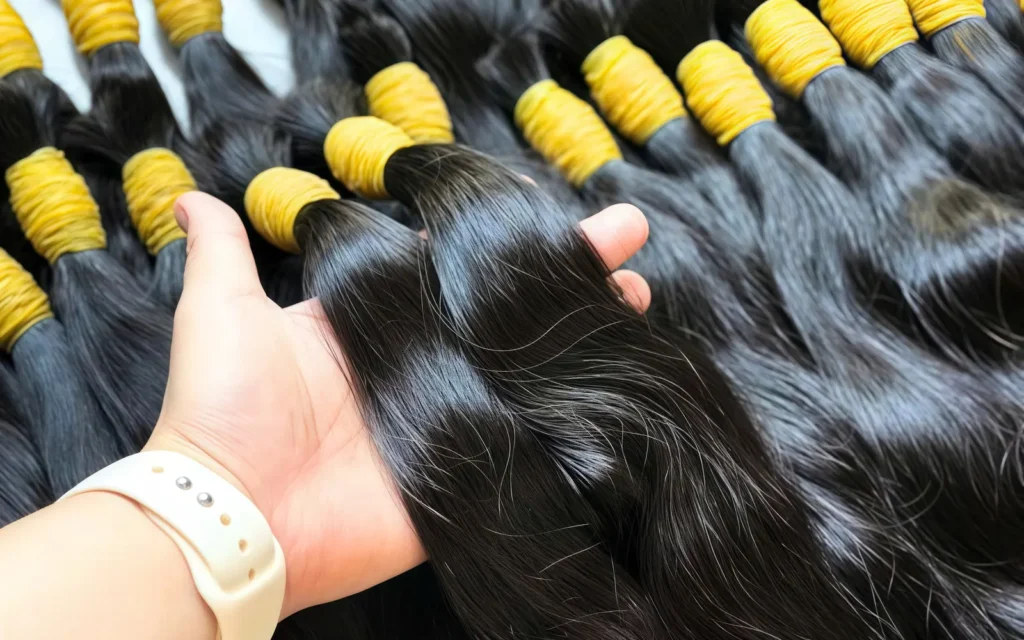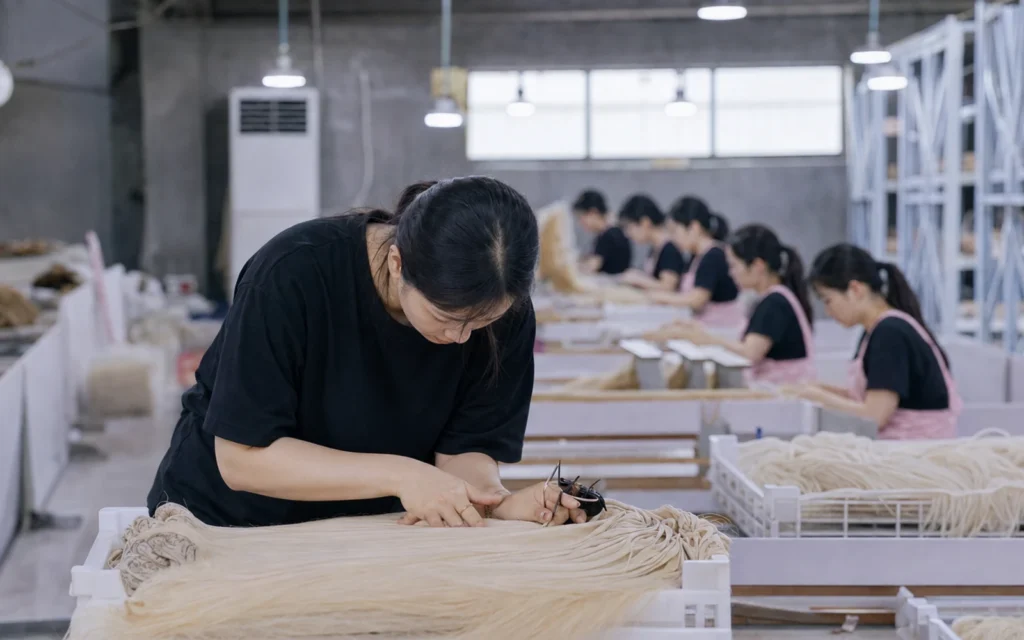
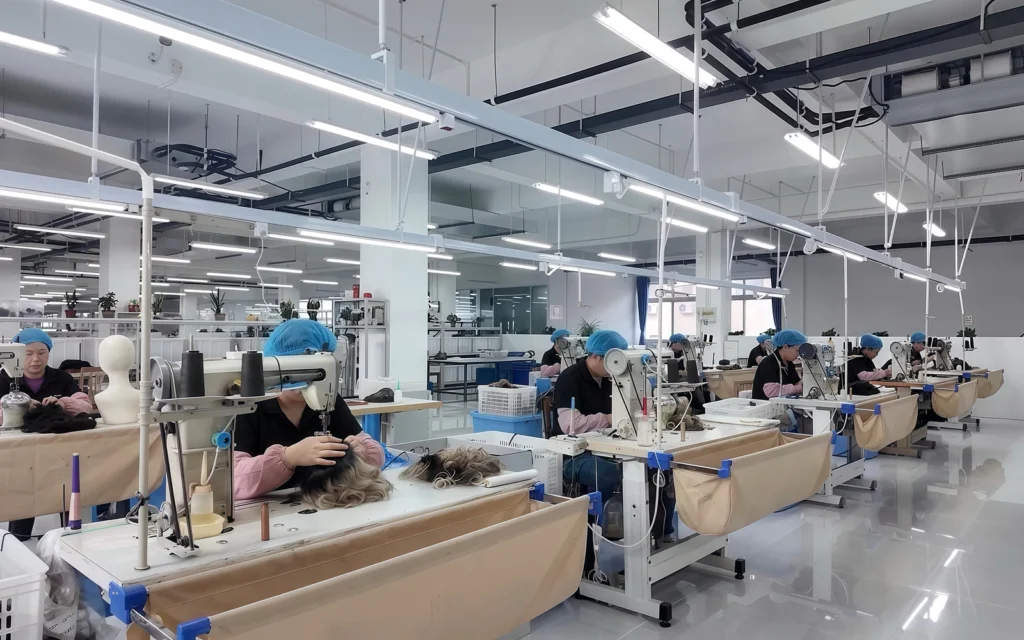
Choosing a hair extension manufacturer requires more than comparing price or sample softness. Buyers need evidence that a supplier can repeat an approved standard. That standard must hold across samples, bulk production, and future reorders.
A strong sample is useful, but it is only one data point. The larger question is consistency. Buyers should examine hair performance, color control, construction, documentation, and production discipline.
This guide gives professional buyers a practical framework for evaluating a human hair extension manufacturer.
Five Tests for a Manufacturer Shortlist
Before serious price negotiation, a credible manufacturer should pass five practical tests.
- Turn your commercial idea into a measurable product specification.
- Explain hair-quality terms through materials, processing, and expected performance.
- Control color, texture, weight, construction, and attachment details.
- Reproduce an approved sample in pilot, bulk, and repeat orders.
- Record quality problems, identify causes, and apply corrective action.
Factory size and certifications can support your assessment. However, they cannot replace product testing or process evidence.
1. Define the Product Before Comparing Suppliers
Many sourcing problems begin before the first sample. The buyer asks for a quotation without defining the product clearly.
For example, two factories may quote the same 20-inch tape-in product. Yet their hair, fullness, tape, color standard, and packaging may differ. A lower quote may therefore describe a different product.
Before comparing suppliers, prepare one written specification. Use the same specification for every supplier on your shortlist.
Your initial specification should include
- Product category and construction.
- Required hair quality and expected performance.
- Finished length, weight, and agreed tolerances.
- Long-hair ratio or end fullness where relevant.
- Color reference, undertone, root effect, and blend.
- Texture and the process used to create it.
- Attachment dimensions, materials, and construction details.
- Packaging, labels, barcodes, inserts, and carton requirements.
- Required tests, inspection methods, and acceptance criteria.
A capable supplier should ask detailed follow-up questions. Those questions help expose unclear specifications before production begins. By contrast, an immediate yes to every request can hide unresolved details.
2. Confirm Who Actually Controls Production
“Factory direct” is meaningful only when the factory controls important production processes. Some manufacturers also use qualified outside partners for selected stages.
That arrangement is not automatically a problem. The real issue is whether the manufacturer controls those stages. Ask who performs each process and who checks the result.
Evidence worth requesting
| Evidence | What it helps verify | What it cannot prove alone |
|---|---|---|
| Live factory walkthrough | Current production activity, workflow, equipment, and staffing | Consistency across future orders |
| Business and factory documents | Legal identity and operating scope | Finished product performance |
| Process or batch records | How specifications become production instructions | Whether every check was completed correctly |
| Inspection forms | Defined checkpoints and responsibilities | Whether limits match your requirements |
| Certification details | Scope and status of a management system | The quality of every finished extension |
During a walkthrough, ask to see several real production areas. Do not rely only on a showroom. Look for incoming inspection, color work, construction, final inspection, and finished-goods storage.
3. Define Hair Quality in Operational Terms
Terms such as “virgin hair,” “Remy hair,” and “double drawn” are widely used. However, suppliers may define them differently.
Therefore, do not choose a hair extension manufacturer by a grade name alone. Ask what each term means inside that factory.
Questions that reveal more than a grade label
- What raw-hair characteristics are accepted for this quality level?
- How is cuticle direction controlled?
- Which chemical and color processes are used?
- Does softness depend on temporary surface treatment?
- How are shorter hairs controlled or removed?
- How is end fullness measured?
- How are materials separated between quality levels?
- What performance should buyers expect after washing and normal use?
Raw-hair origin can be relevant, but it is not a finished-product specification. Sorting, processing, coloring, blending, and construction also affect performance.
4. Evaluate Product Construction, Not Hair Alone
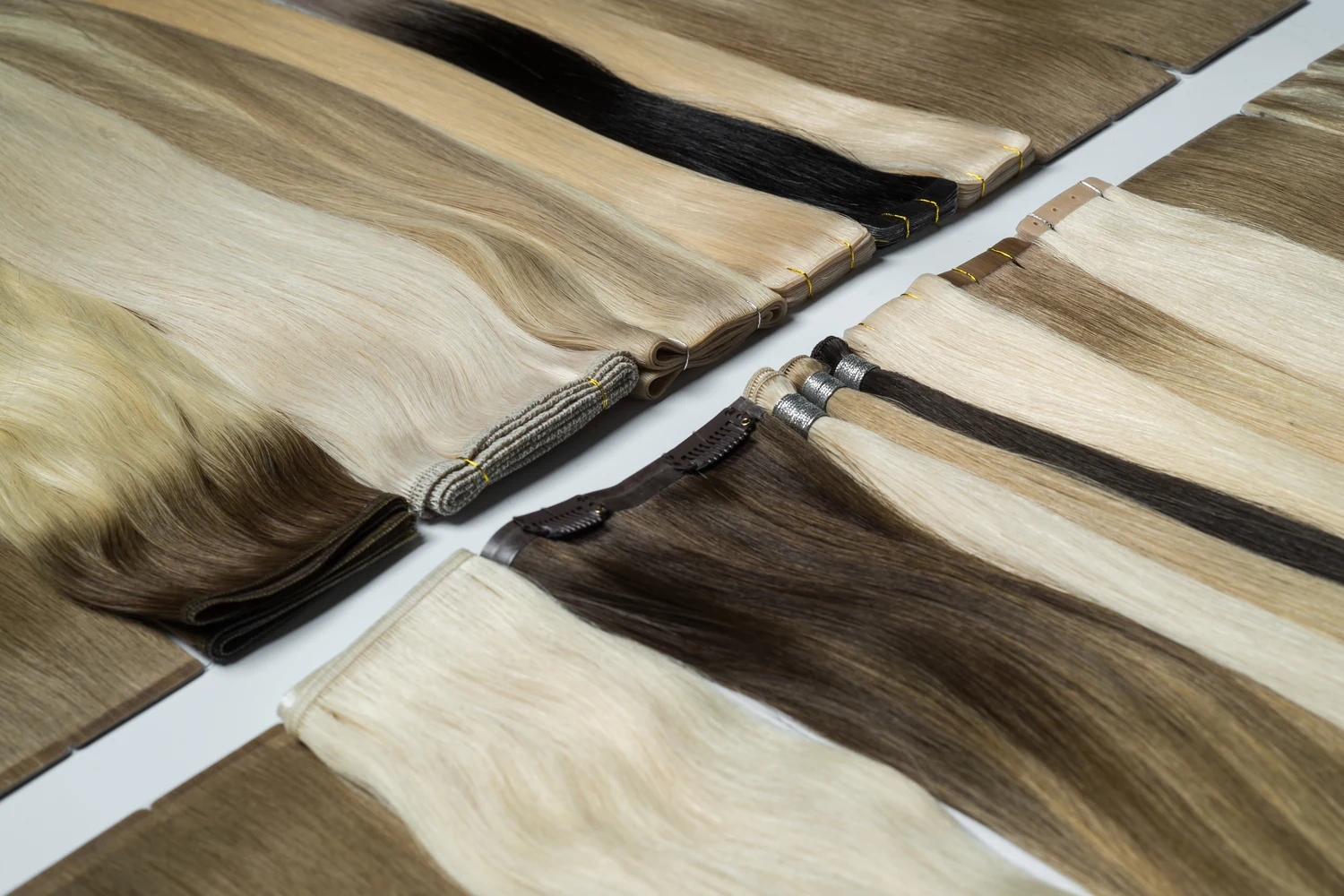
Good hair can still become a poor finished product. Construction quality matters because each attachment system has different control points.
Tape-In Hair Extensions
Check attachment dimensions, hair distribution, edge finish, adhesive compatibility, and release liners. Also inspect air bubbles and shedding resistance.
Then confirm whether the tape system suits your installation and removal products. Climate and market practice may also affect the specification.
Weft Hair Extensions
Review the weft base, hair distribution, shedding control, thickness, flexibility, and comfort. Next, confirm whether the selected weft can be cut.
Some weft structures require sealing after cutting. Others do not. Therefore, always verify the rule for the exact product.
Keratin Tip Hair Extensions
Check bond size, shape consistency, hair distribution, shedding resistance, and bond integrity. The bond should match the intended installation system.
Clip-In Hair Extensions
Inspect the base, clips, clip spacing, stitching, weight distribution, and comfort. A good set should also lie naturally when installed.
The manufacturer should explain how construction choices affect cost, comfort, and appearance. Those trade-offs should be clear before approval.
5. Test Color and Texture as Repeatable Standards
Color consistency is critical for a professional hair extension range. A shade can look acceptable alone but fail beside another batch.
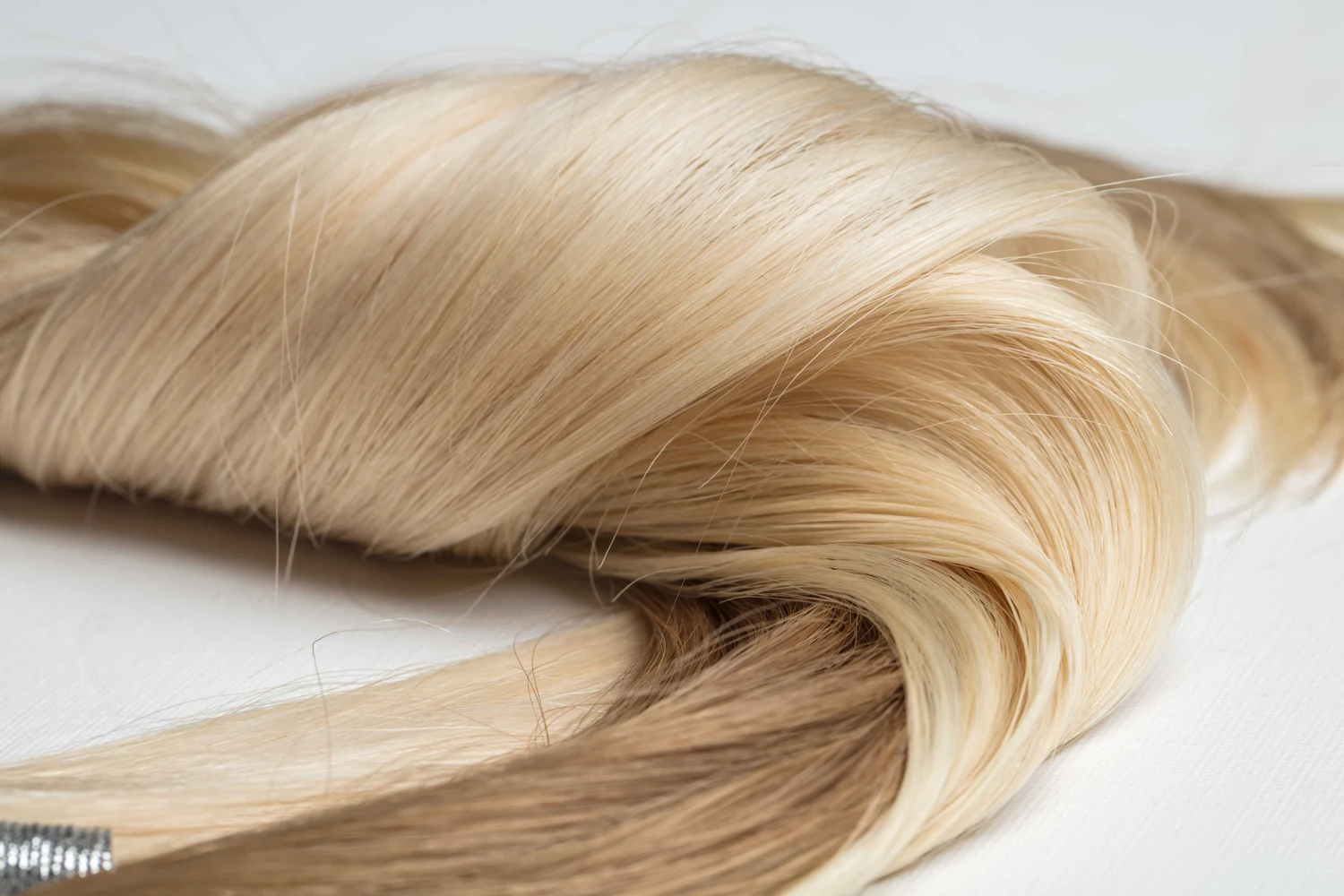
Whenever possible, approve a physical master standard. Support it with a documented hair extension color ring or custom shade reference.
Record the shade code, undertone, root length, blend, and lighting conditions. Photos are useful records, but they should not replace a physical reference.
Check color across
- Natural daylight and controlled indoor light.
- The top, mid-lengths, and ends.
- Different lengths and weights.
- The same shade across different product categories.
- The approved sample, pilot batch, and repeat order.
For multi-category ranges, compare tape-in, weft, keratin tip, and clip-in shades together.
Texture also needs a defined reference. Confirm how the texture is created and how it changes after washing.
6. Use a Multi-Stage Sample Approval Process
One sample should not decide the entire supplier relationship. A staged approval process gives buyers better evidence.
Stage 1: Evaluation Samples
First, compare suppliers, product structures, hair options, colors, and general workmanship. The goal is to narrow the shortlist.
Stage 2: Customized Samples
Next, request samples based on your actual specification. Record every change from the standard product in writing.
Stage 3: Approved Control Sample
After testing, label the final approved sample clearly. Keep one reference whenever possible. The manufacturer should retain a matching control reference.
Stage 4: Pilot Order
A pilot order tests whether the approved standard survives production scale. It can reveal variation that one sample cannot show.
Stage 5: Bulk and Repeat-Order Comparison
Compare incoming goods with the approved reference. Do not rely on memory or website images. Record findings for future reorders.
Build a Test Protocol Before Samples Arrive
Your test protocol may include the following checks.
- Dry visual and tactile inspection.
- Length, weight, and construction measurements.
- Washing under defined conditions.
- Wet and dry combing observations.
- Shedding and tangling checks.
- Color-transfer observations during washing.
- Heat styling within the stated temperature range.
- Attachment-specific installation and removal testing.
- Professional wear testing where appropriate.
- Comparison with approved color and texture references.
No universal wash count can prove that every hair extension is good. Instead, define tests around your product position and customer expectations.
7. Look for a Quality System, Not Just Final Inspection
Final inspection cannot correct every upstream problem. Reliable production therefore needs controls at several stages.
- Inspect incoming raw materials and identify each lot.
- Define process specifications for preparation, color, texture, and construction.
- Use in-process checks before defects spread.
- Inspect finished goods against the approved specification.
- Retain samples and records for later investigation.
- Apply corrective action when a recurring issue appears.
ISO 9001 relates to quality management systems. It does not guarantee a specific grade of human hair.
Certification can still support supplier evaluation. However, buyers should verify its scope and assess the actual factory controls.
Also ask how the factory handles nonconforming goods. The answer should cover identification, separation, review, rework, or rejection.
8. Evaluate OEM, ODM, and Private Label Support Separately
A factory may make a strong standard product but lack development capability. Therefore, evaluate product quality and development support separately.
For OEM, ODM, or private label work, review whether the team can manage these tasks.
- Structured product briefs and version control.
- Custom colors, roots, blends, textures, lengths, and weights.
- Custom product structures where technically suitable.
- Packaging dielines, labels, inserts, and barcodes.
- Sample comments and revision history.
- Approved materials and components.
- Pre-production confirmation.
- Change control after approval.
- Coordination between product, production, quality, and packaging teams.
For ODM projects, look for engineering and problem-solving ability. Ask which changes need testing before approval.
Also confirm which changes affect MOQ, lead time, or technical risk. Those effects vary by project and specification.
9. Compare Quotations on the Same Basis
A low unit price may reflect a different product. Hair, construction, packaging, tolerances, or trade terms may differ.
Before comparing quotations, align the commercial basis.
- Use the same product specification.
- Use the same hair-quality definition.
- Match the length and weight basis.
- Match color and texture complexity.
- Use equivalent packaging components.
- Align inspection and testing requirements.
- Compare the same Incoterm and shipping scope.
- Review claim-handling terms on the same basis.
Also confirm minimums for each product, color, length, and custom component. Ask how repeat orders are scheduled.
The goal is not the cheapest quotation. The goal is a repeatable product at a commercially workable cost.
10. Judge Communication by Its Precision
Fast replies are helpful, but precision matters more. A dependable supplier should summarize the agreed specification clearly.
The supplier should also identify unresolved points. Sampling changes and approvals should be recorded rather than left in chat history.
When a problem appears, watch how the supplier responds. Does the team request batch references, photos, quantities, and test conditions?
Next, check whether the team investigates a likely cause. A useful after-sales process should make the next order safer.
Warning Signs When Shortlisting a Manufacturer
One warning sign may have a reasonable explanation. Several warning signs together deserve closer investigation.
- Hair grades have no clear processing or performance definition.
- The quotation is not linked to a clear specification.
- Sample details are not recorded.
- Live production verification is consistently avoided.
- Every customization request is accepted without technical discussion.
- Phone photos are the only color reference.
- Factory representatives cannot explain in-process quality checks.
- Repeat orders have no retained sample or batch reference.
- Absolute quality claims lack test methods or care conditions.
- Compensation repeatedly replaces cause analysis.
A Practical Supplier Scorecard
A scorecard can make supplier comparison more disciplined. Adjust the weighting to your own product and business priorities.
| Evaluation Area | Suggested Weight | What to Score |
|---|---|---|
| Hair performance and definition | 20% | Material definition, processing transparency, wash and wear results |
| Specification and product understanding | 15% | Accuracy, follow-up questions, tolerances, and documentation |
| Color and texture repeatability | 15% | Master standards, batch comparison, and cross-product consistency |
| Manufacturing transparency | 15% | Process visibility, in-house control, partner control, and records |
| Product construction | 10% | Attachment quality, workmanship, comfort, and shedding control |
| Quality management | 10% | Incoming, in-process, and final checks; records; corrective action |
| Development and private label capability | 5% | Customization, packaging, revisions, and change control |
| Delivery and commercial fit | 5% | MOQ, capacity, lead time, quotation clarity, and reorder support |
| Communication and issue resolution | 5% | Precision, ownership, investigation, and response quality |
| Total | 100% | Score only after evidence and testing |
Do not let one excellent score hide a critical weakness. Attractive pricing cannot compensate for unstable product performance.
Questions to Ask Before Approving a Supplier
- How do you define the quoted hair quality?
- Which production stages are completed in-house?
- Which details appear on the final product specification?
- Which tolerances apply to the approved product?
- How do you control shade consistency between batches?
- Which samples will both sides retain after approval?
- Which checks are completed during production and final inspection?
- How are nonconforming goods handled?
- Which changes require a new sample or approval?
- How are MOQs and lead times confirmed for each specification?
- How are repeat orders linked to the approved standard?
- What information is required to investigate a quality claim?
The quality of each answer matters. The evidence behind that answer matters even more.
A Lower-Risk Approval Sequence
For most professional buyers, a staged approval sequence reduces avoidable sourcing risk.
- Prepare the product and commercial brief.
- Shortlist manufacturers using the same criteria.
- Verify production scope and quality processes.
- Order comparable evaluation samples.
- Test each sample with a written protocol.
- Develop and approve the final customized standard.
- Retain a control sample and signed specification.
- Place a pilot order.
- Inspect the pilot against the approved standard.
- Scale gradually and review reorder consistency.
This sequence takes more work at the start. However, it can reduce expensive corrections after inventory and packaging commitments.
Make a Go/No-Go Supplier Decision
The best hair extension manufacturer is not automatically the largest or cheapest. It should support the product promise your brand makes.
Treat supplier approval as a quality-system decision. Define the product, test performance, approve a reference, and verify production controls.
Then scale only after the manufacturer demonstrates repeatability. This approach gives purchasing teams a stronger basis for long-term supplier decisions.
Epoche is a human hair extension manufacturer in Qingdao, China. We produce tape-in, weft, keratin tip, and clip-in hair extensions.
Our team supports product specification, sampling, color development, OEM/ODM, private label packaging, production, and quality control.
Planning a new collection or reviewing your current supply? Request samples and share your target specifications with our team.
Frequently Asked Questions
What is the difference between a hair extension manufacturer and a wholesale supplier?
A manufacturer controls at least the core processes used to make the finished extensions. A wholesaler may stock or resell products from other companies.
Either model can serve a buyer. However, you should know who controls the approved product standard.
Can a good sample prove that a manufacturer is reliable?
No. A good sample proves that the supplier can provide one acceptable sample. Reliability requires repeatability across later production.
Keep an approved control sample. Compare pilot, bulk, and repeat orders with that reference.
Does ISO 9001 guarantee high-quality hair extensions?
No. ISO 9001 relates to quality management systems, not a specific hair grade. Product testing and specification control are still necessary.
Should I choose a manufacturer based on raw-hair origin?
Raw-hair origin can be one specification factor. However, it does not determine finished quality by itself.
Also examine sorting, cuticle direction, processing, color, texture, blending, construction, and quality control.
How should I compare prices from different hair extension manufacturers?
First align the product specification, hair quality, length, weight, color, texture, construction, packaging, and trade terms.
Otherwise, the lowest quotation may simply describe a different product.
When should I move from samples to a bulk order?
Move forward after the customized sample passes your written test protocol. Both parties should confirm the final specification and approved reference.
A pilot order is usually a safer next step than immediate full-scale purchasing.