How are hair extensions made? The answer involves much more than attaching hair to tape, a weft, a bond, or a clip. A professional factory must control the hair itself before it can build a consistent finished product.
The process starts with raw-hair selection and continues through preparation, color development, product construction, quality control, packaging, and shipment. Each stage affects the next one. Therefore, a strong finished extension depends on process control from the beginning.
This guide follows six practical stages in the human hair extension manufacturing process. It also explains how the workflow changes for Tape-In, Weft, Keratin Tip, and Clip-In products.
Six Stages of Hair Extension Production
| Stage | Main Purpose | What the Factory Controls |
|---|---|---|
| 1. Raw Hair Selection | Start with material that fits the product brief | Hair category, condition, direction, length, texture, and lot separation |
| 2. Hair Preparation | Prepare the hair for controlled processing | Cleaning, sorting, alignment, length distribution, and material grouping |
| 3. Color and Texture Development | Create the approved visual standard | Shade, undertone, root effect, blend, texture, and reference matching |
| 4. Product Preparation | Prepare the hair for the chosen extension system | Length, weight, long-hair ratio, distribution, and component requirements |
| 5. Extension Construction | Build the finished attachment structure | Tape, weft, tip, clip, base, stitching, bonding, and workmanship |
| 6. QC, Packing and Shipment | Confirm the approved product before release | Hair, color, construction, labeling, packing, and order records |
The exact route varies by product and shade. However, these six stages show the basic logic behind controlled hair extension production.
Stage 1: Select and Inspect the Raw Hair
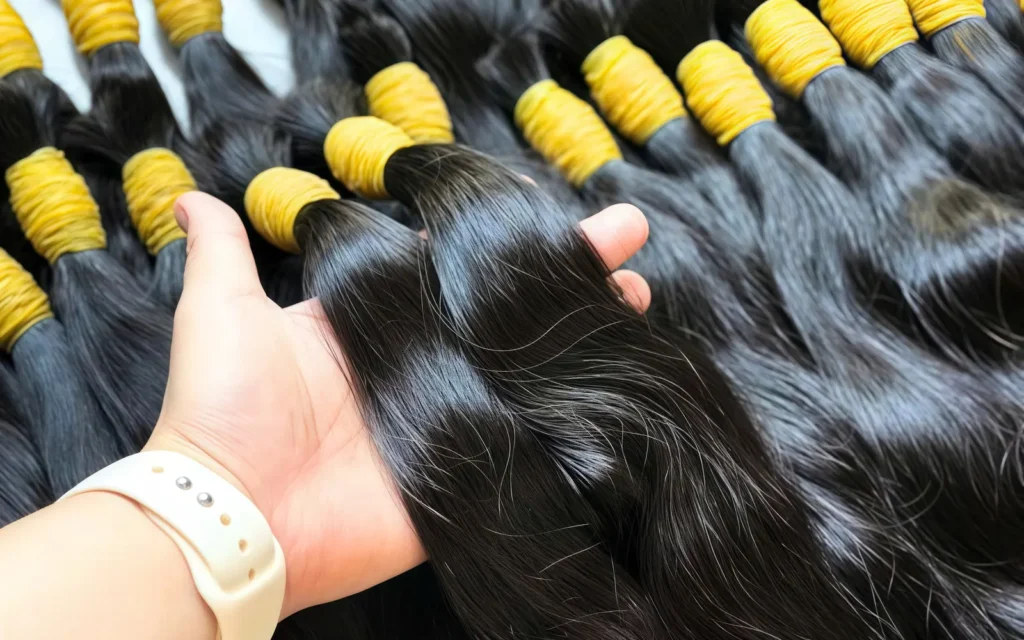
Production begins with the incoming hair, not with the attachment system. The factory first checks whether the material fits the intended product specification.
Hair category is one part of that decision. Epoche works with Virgin Hair and Remy Hair options, but the label alone does not define the finished quality.
Instead, the production team also reviews the condition of the incoming material. It considers direction, texture, length distribution, and suitability for the planned color route.
For example, a dark natural shade and a very light blonde may require different starting material. Likewise, a straight product and a textured product may need different preparation.
Why Lot Control Matters
The factory should keep relevant incoming groups identifiable. Otherwise, different starting materials can enter one production route and create avoidable variation.
Lot separation also supports later investigation. If a repeat order behaves differently, the team can compare the incoming material and production records rather than rely on memory.
Therefore, raw-hair inspection provides the foundation for every later stage.
Stage 2: Prepare and Organize the Hair
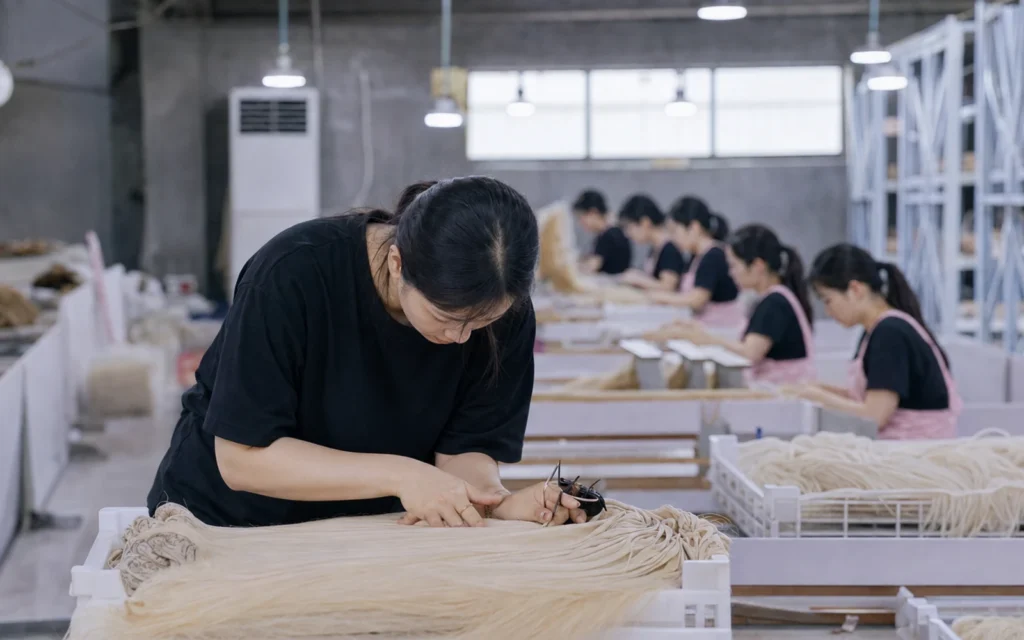
Next, the factory prepares the selected hair for color and construction. This stage brings the material into a more controlled condition.
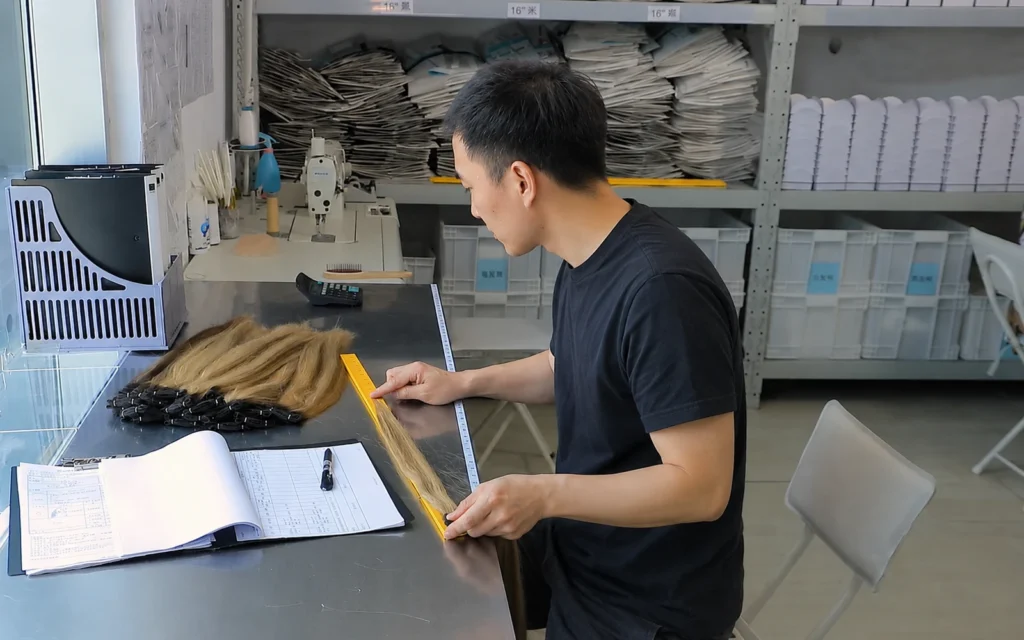
The team may clean, sort, comb, align, and regroup the hair according to the approved product brief. It also manages shorter and longer fibers according to the required length distribution.
At this point, production staff must protect any root-to-tip direction requirement. They also need to prevent unrelated lots or specifications from mixing.
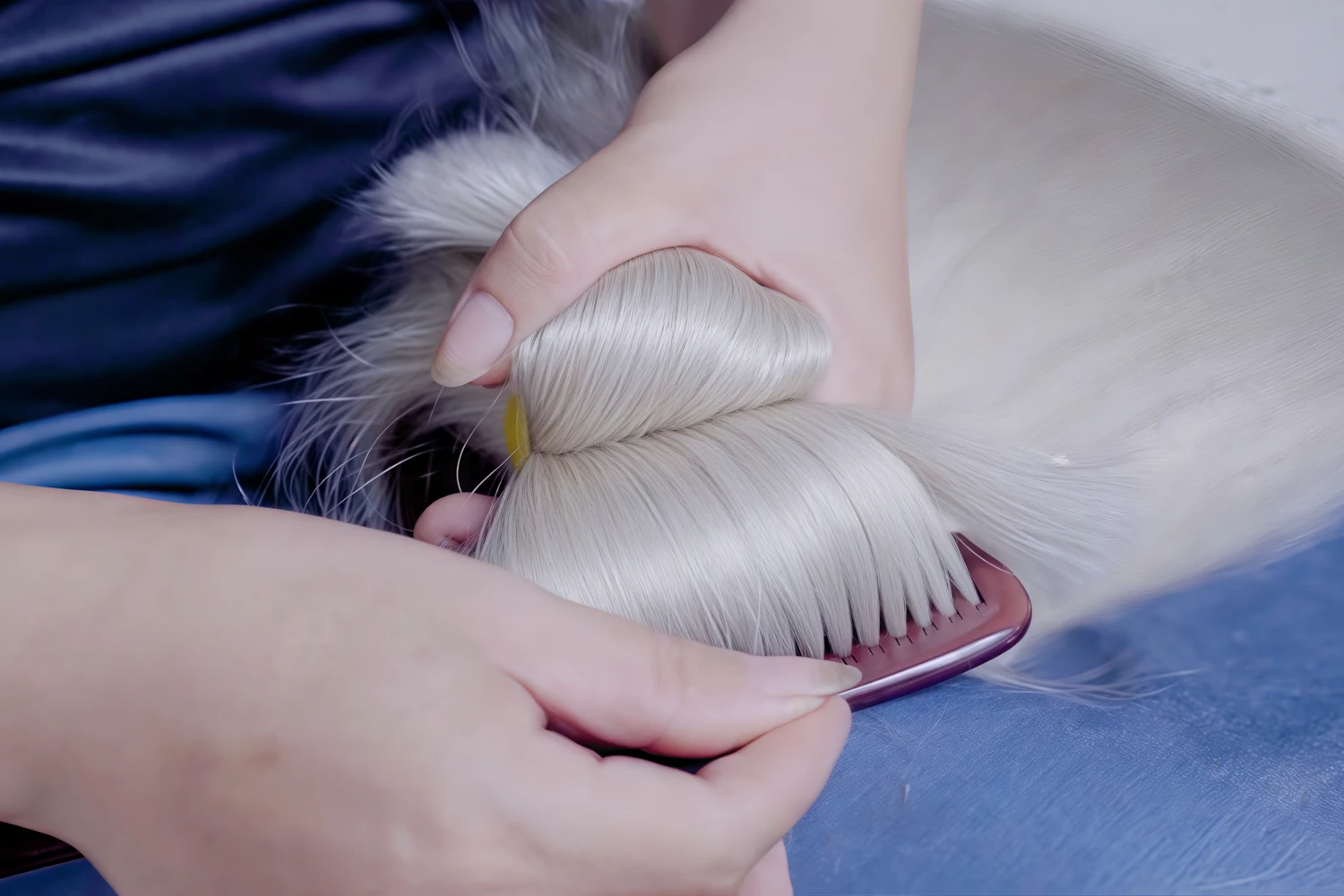
Length Distribution Affects the Finished Look
Two bundles can share the same stated length and total weight but still look different. The reason is simple: the hair can contain different proportions of long and shorter fibers.
Therefore, the factory must prepare the hair around the approved drawn level or long-hair-ratio requirement. That decision affects taper, end fullness, weight distribution, and product positioning.
The buyer should approve this feature through both the written specification and a physical reference. A label such as “double drawn” is not enough by itself.
Stage 3: Develop Color and Texture
After preparation, the factory moves into color and texture work where required. This stage can change both appearance and fiber condition.
First, the color team works toward the approved shade reference. It may need to control depth, undertone, root effect, highlights, blends, or other visible details.
Next, the team compares the result with the approved physical standard. A hair extension color ring can support this system, especially when the brand manages many shades.
However, a customer-facing color ring should not replace the protected production reference. The factory still needs a controlled standard for manufacturing and repeat orders.
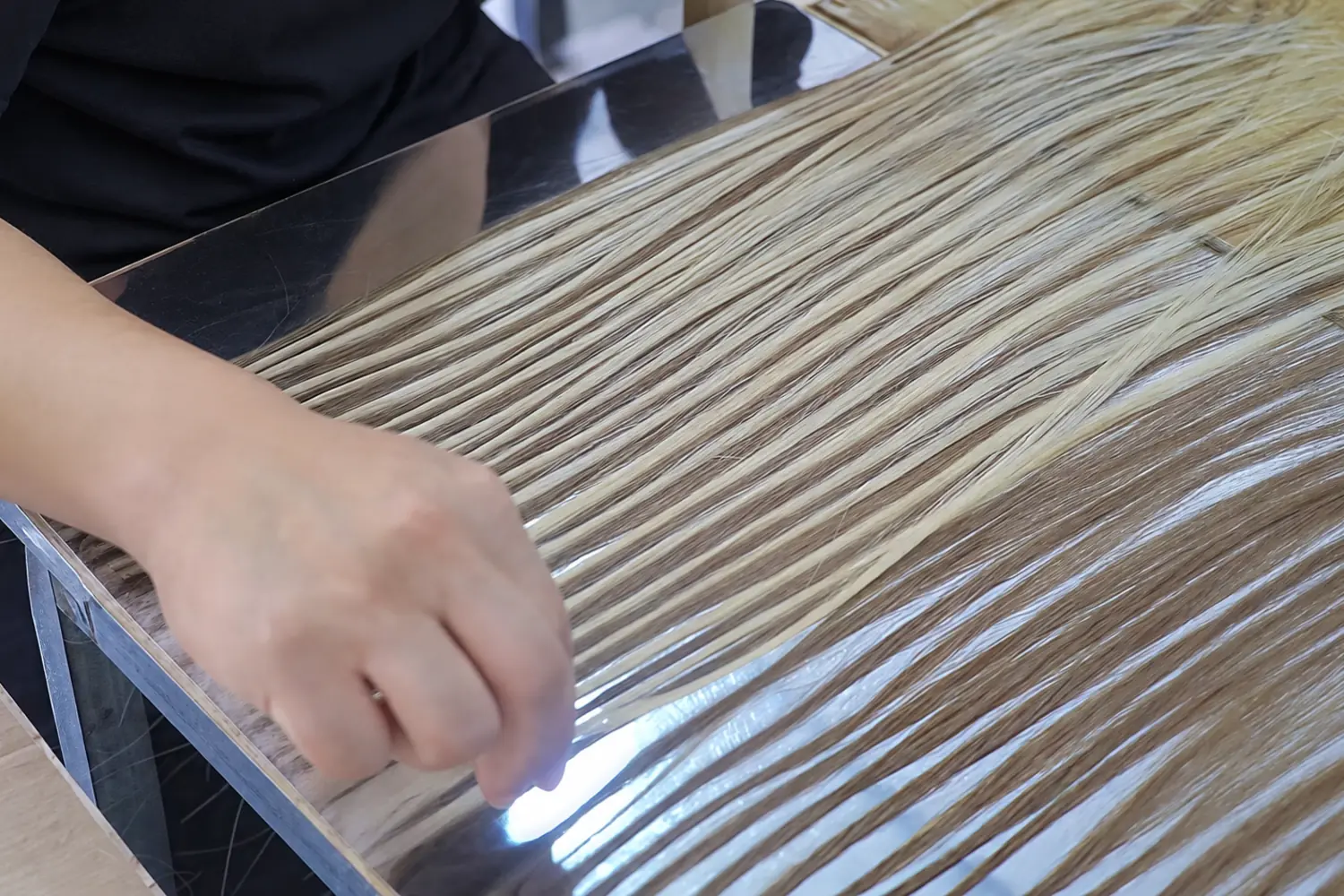
Color Is More Than a Formula
The same nominal formula can produce different results when the starting hair changes. Therefore, color control starts with the actual material in the batch.
The team must also review multi-tone colors by placement. For example, rooted shades, highlights, ombré, and balayage depend on distribution as well as overall tone.
Texture requires the same discipline. The factory should match the approved pattern and confirm how it behaves after the agreed washing or handling process.
As a result, color and texture development becomes a repeatability task rather than a one-time visual exercise.
Stage 4: Prepare the Hair for the Final Product System
Once the hair meets the approved color and texture direction, the factory prepares it for the chosen extension system.
This step connects the hair specification with the final construction. The team confirms length, finished weight, hair distribution, fullness, and the components needed for the product.
For example, a Tape-In piece needs a different distribution plan from a Keratin Tip strand. A wide Weft also needs a different weight balance from a Clip-In set.
Therefore, the factory should not treat one prepared hair bundle as interchangeable across every product format.
The Product Brief Guides Preparation
A practical production brief should identify the exact product family and version. It should also record the approved hair quality, shade, texture, length, weight, and fullness.
In addition, it should define the attachment or base structure. This allows the team to prepare the hair for the actual finished product instead of a generic category.
Stage 5: Build the Extension Structure
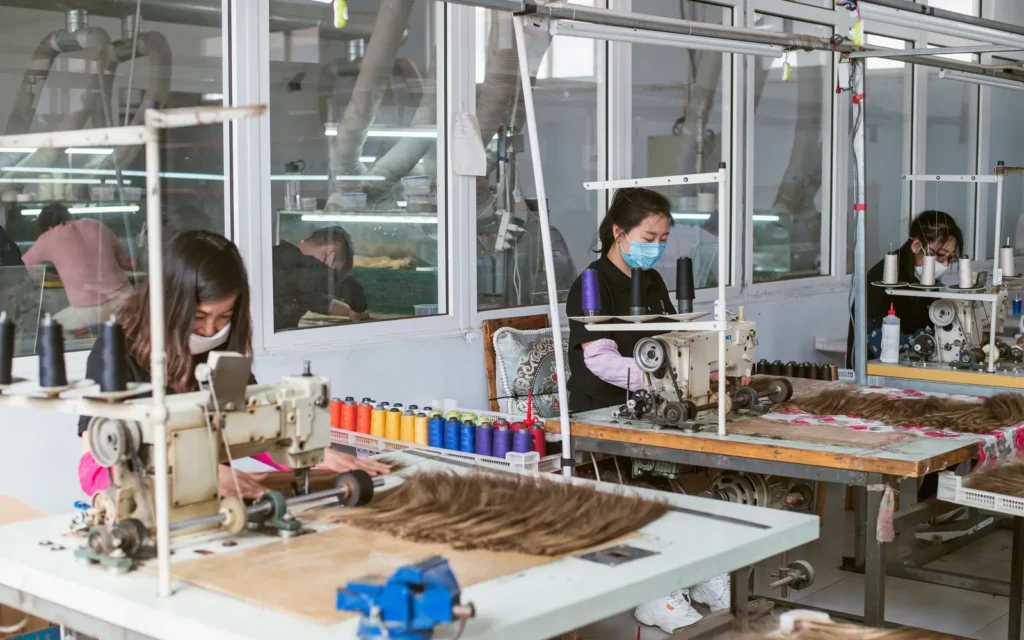
At this stage, specialized production teams turn the prepared hair into finished extensions. The construction method changes by product family.
| Product Family | Main Construction Focus | Important Control Points |
|---|---|---|
| Tape-In | PU or tape attachment area | Dimensions, hair distribution, adhesive system, edge finish, and cleanliness |
| Weft | Weft base, seam, band, or layered construction | Width, density, shedding control, flexibility, cutting rules, and edge treatment |
| Keratin Tip | Individual tip or bond formation | Tip shape, size, hair distribution, bond consistency, and intended installation method |
| Clip-In | Weft or PU base combined with clips | Piece layout, stitching, clip spacing, weight balance, and finished set configuration |
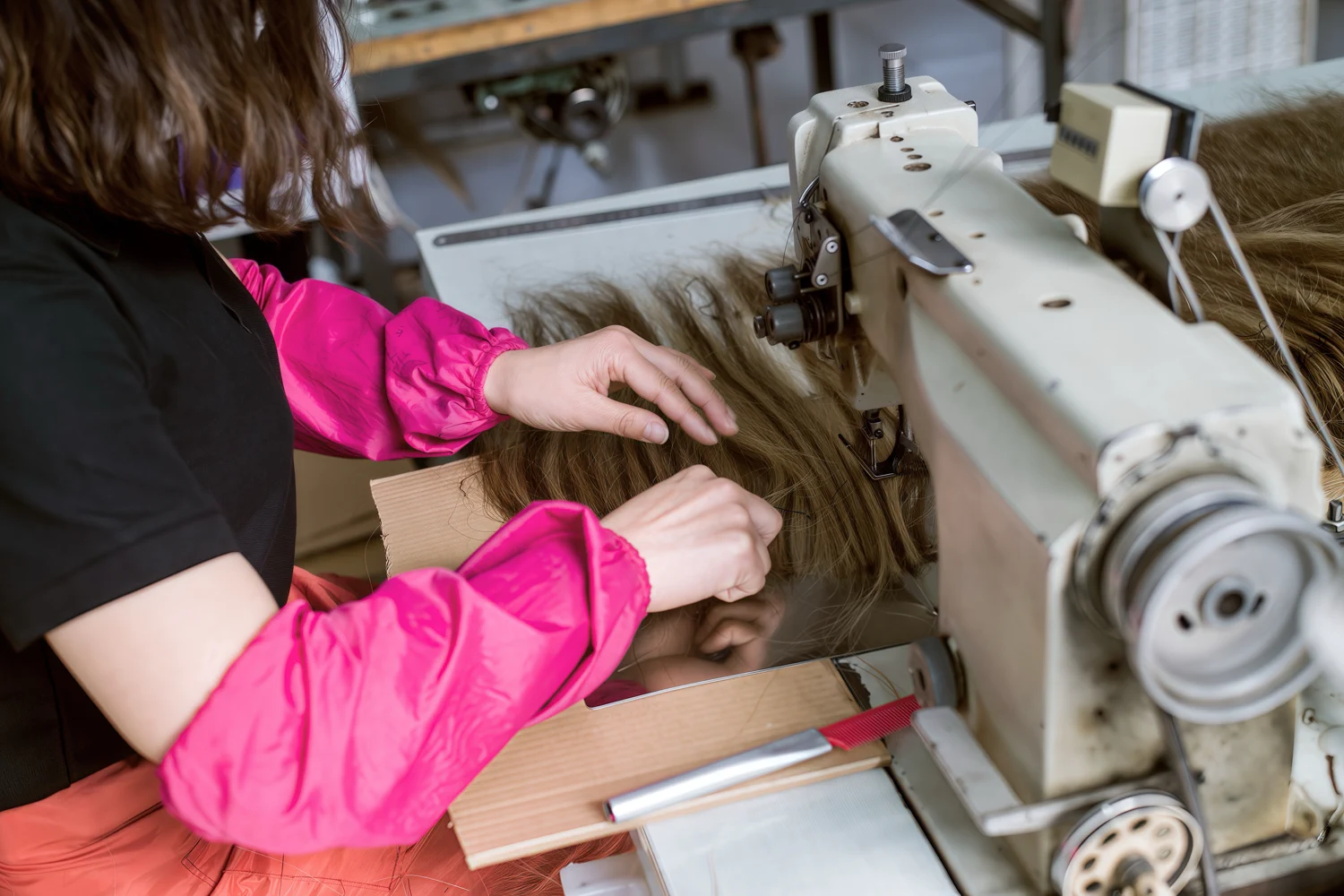
Tape-In Hair Extension Production
For Tape-In Hair Extensions, the factory controls the attachment area as carefully as the hair. The team checks tab dimensions, hair distribution, base finish, and the specified adhesive system.
Different Tape-In structures also require different construction methods. Classic, Slimline, Invisible, Holed, and Mini Tape-In products do not share one identical base.
Therefore, the production order must identify the exact Tape-In structure rather than simply state “tape extensions.”
Weft Hair Extension Production
For Weft Hair Extensions, the team builds the approved seam, band, PU base, or layered structure. It also controls width, density, flexibility, and shedding resistance.
Cutting rules matter because weft structures behave differently. Genius Weft can be cut to the required width without adhesive edge sealing.
By contrast, freshly cut Flex Weft and Volume Weft ends require sealing. Therefore, production instructions and customer guidance must match the exact weft type.
Machine Weft and Hand-Tied Weft also contain return hair. Other weft constructions should not automatically inherit that description.
Keratin Tip Hair Extension Production
For Keratin Tip Hair Extensions, the factory forms individual strands around the approved connector design.
The team controls tip shape, size, hair amount, consistency, and bond integrity. It also aligns the product with the intended installation method.
Because different tip formats use different attachment systems, the factory should never publish one installation rule for every Keratin Tip product.
Clip-In Hair Extension Production
For Clip-In Hair Extensions, production combines the hair structure with a planned clip layout.
Classic Clip-In uses a weft-based construction with clips. PU or Seamless Clip-In uses a PU base, while Invisible Clip-In uses an injected-style base.
Next, the team controls piece widths, clip spacing, stitching, and weight distribution. Those details affect both comfort and how naturally the set lies.
Stage 6: Inspect, Finish, Pack and Release the Order
Construction does not mark the end of production. The factory still needs to confirm that the finished goods match the approved standard.
Quality teams review the hair, color, texture, length, weight, workmanship, and product-specific construction. They also inspect packaging and labeling requirements.
However, final inspection should not carry the entire quality system. Earlier checks remain important because some problems cannot be corrected after construction.
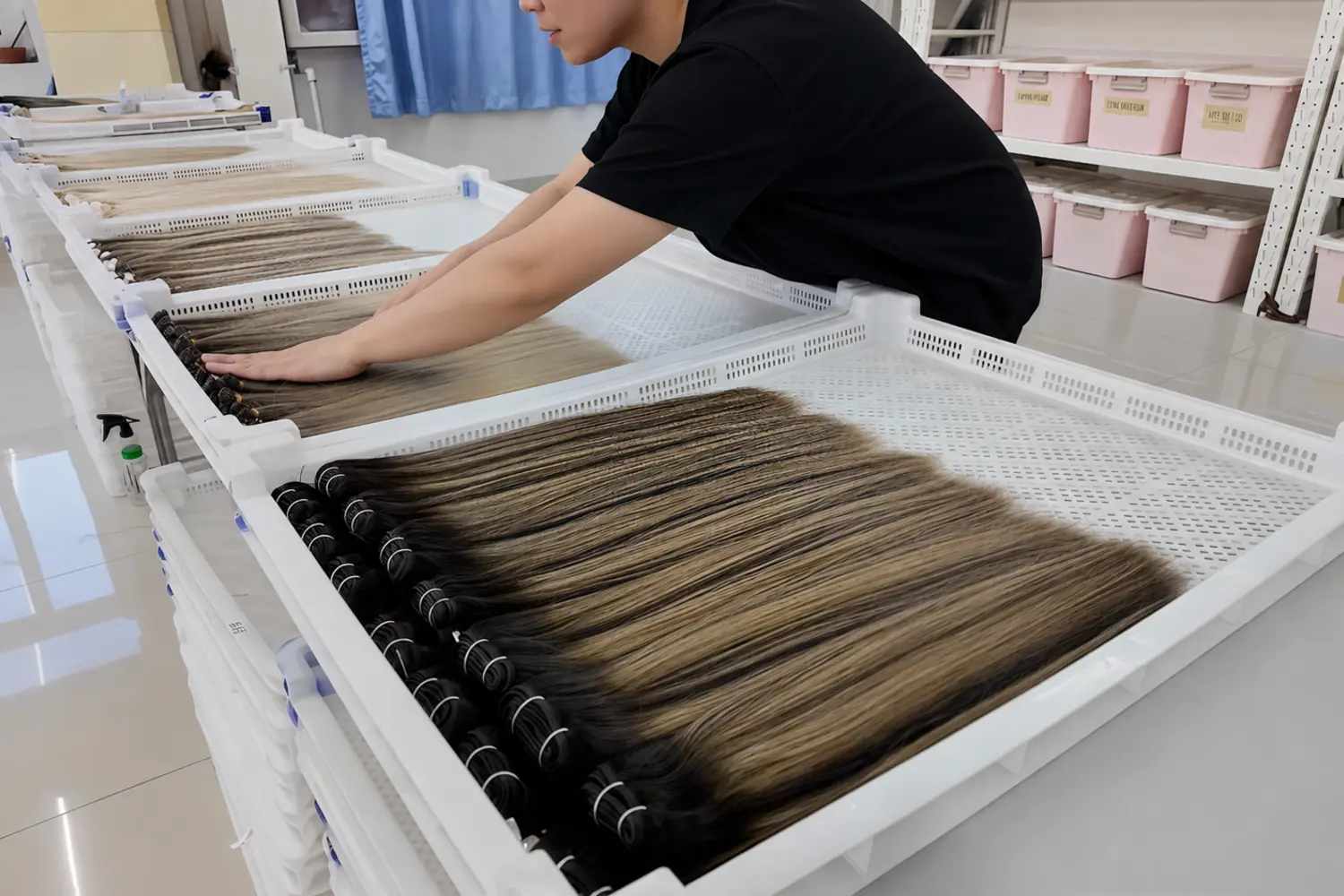
Packaging Is Part of the Finished Specification
Once the product passes the required review, the team prepares it for packing. Brand projects may include labels, inserts, barcodes, shade names, or other private-label components.
The factory should connect those elements to the correct product code and shade. Otherwise, a good extension can still reach the customer in the wrong package.
Finally, the shipping team prepares the cartons and order documentation according to the confirmed commercial requirements.
Quality Control Happens Throughout Production
A common misconception is that a factory makes the product first and checks quality at the end. In practice, reliable production uses checkpoints throughout the workflow.
Incoming material requires inspection. Color work needs reference comparison. Construction needs in-process checks. Finished goods need final review.
Therefore, the complete manufacturing system matters more than one final inspection table.
This is also why buyers should review the factory process when choosing a supplier. Epoche’s manufacturing overview shows how material, color, construction, and quality control work together.
Why Approved Samples Matter in Production
Written specifications are essential, but physical samples add another layer of control. They show the agreed visual and tactile result.
After sample approval, the factory can use the reference alongside the production specification. This supports color, texture, fullness, construction, and finished appearance.
In addition, a retained reference can help both sides review later orders. The team can compare actual goods with a known approved standard.
However, the sample should not replace the written specification. The strongest system uses both.
What Buyers Should Check During a Factory Review
A factory visit or live walkthrough can help buyers understand whether the process matches the supplier’s claims.
Rather than viewing only finished products, ask to see several stages.
- Incoming raw-hair inspection and storage.
- Hair preparation and material separation.
- Color development and physical reference control.
- Tape-In, Weft, Keratin Tip, or Clip-In production areas.
- In-process quality checks.
- Final inspection and finished-goods review.
- Packaging and order identification.
- Retained samples or production records where applicable.
Each area gives different evidence. Together, they show whether the factory can connect a product brief with actual production.
How Product Development Connects to Manufacturing
Manufacturing becomes more complex when a brand requests custom colors, structures, packaging, or specifications.
First, the commercial and product teams clarify the brief. Next, sampling converts the idea into a physical product.
Then the team records approved changes and prepares the final production standard. This creates a bridge between product development and bulk manufacturing.
Without that bridge, a strong sample can remain a one-off result. With a controlled specification, the factory has a clearer basis for repeat production.
How Are Hair Extensions Made in a Professional Factory?
In simple terms, professional production follows a controlled sequence.
- Select raw hair that fits the target product.
- Prepare and organize the material.
- Develop the approved color and texture.
- Set length, weight, fullness, and product-specific requirements.
- Build the Tape-In, Weft, Keratin Tip, Clip-In, or other approved structure.
- Inspect, finish, pack, identify, and release the order.
The most important point is continuity. Each stage should carry the approved specification forward rather than reset the product standard.
What a Buyer Should Take Away
Hair extension manufacturing is not one isolated production step. It is a chain of material, process, construction, and quality decisions.
For that reason, buyers should evaluate more than the final sample. They should also understand how the factory controls raw hair, color, product construction, and repeat production.
Epoche manufactures human hair extensions across Tape-In, Weft, Keratin Tip, and Clip-In product families. The manufacturing system connects approved hair specifications, color references, construction requirements, inspection, and packaging.
You can also learn more about the company, production background, and quality approach on the About Epoche page.
Frequently Asked Questions
Are All Human Hair Extensions Made the Same Way?
No. The early hair-preparation stages may share some principles, but the final construction changes by product type. Tape-In, Weft, Keratin Tip, and Clip-In products require different attachment structures and controls.
Does Hair Extension Production Start With Coloring?
No. The factory first needs to select and prepare suitable incoming hair. Starting material affects the later color and construction route.
Why Does Color Development Come Before Final Construction?
The factory needs approved hair before it builds the finished extension structure. Color, texture, and hair condition can affect the later production plan.
Is Final Inspection Enough to Control Quality?
No. A strong process uses checks at several stages. Final inspection cannot correct every problem created earlier in the workflow.
Why Do Different Weft Types Need Different Production Rules?
Weft structures use different seams, bands, layers, and finishing methods. For example, Genius Weft can be cut without edge sealing, while freshly cut Flex and Volume Weft ends require sealing.
What Should Buyers Approve Before Bulk Production?
Buyers should confirm the hair specification, color, texture, length, weight, fullness, product construction, packaging, and reference sample. The factory should carry those approvals into production and future reorders.