Hair extension quality control should not begin when the finished order reaches the packing table. By then, a wrong shade, unstable attachment, incorrect weight, or mixed label may already have been repeated across the lot.
Effective quality control connects the buyer’s specification and approved sample with incoming inspection, color control, product-specific construction checks, final inspection, packaging verification, traceability, and corrective action.
This factory-level checklist helps B2B buyers and quality managers. It focuses on production controls rather than buyer-run sample tests.
Hair Extension Quality Control at a Glance
A control plan has five connected layers:
- A written product specification and approved control sample. These define what the factory is expected to reproduce.
- Incoming material control. Raw hair and attachment materials are checked before production value is added.
- First-piece and in-process control. Color and construction are checked while corrections are still practical.
- Final product and packing control. Finished goods, labels, quantities, and packaging are verified before release.
- Records and corrective action. The factory can contain a lot, investigate the cause, and prevent recurrence.
Final inspection cannot replace process control. A quality system should prevent repeated defects, not only find them at the end.
What Must Be Defined in a QC Plan?
“Inspect the product” is not an actionable instruction. Each important characteristic needs a control method and a clear reaction when the result does not conform.
| QC plan element | What it should answer |
|---|---|
| Characteristic | What is being checked: shade, length, weight, dimensions, construction, label, quantity, or another requirement? |
| Approved standard | Which specification, physical color master, approved sample, drawing, artwork version, or component reference applies? |
| Method | How is the characteristic evaluated or measured? |
| Timing and frequency | Is it checked at incoming inspection, first piece, during production, at final inspection, or at several stages? |
| Responsibility | Which trained operator, line leader, quality inspector, or authorized approver owns the decision? |
| Record | Where are the result, lot, inspector, date, and disposition recorded? |
| Reaction | Is the material held, segregated, reworked, re-inspected, rejected, or escalated for approval? |
Numeric tolerances should come from the agreed specification, applicable requirements, and validated production capability—not be invented after a disagreement.
1. Establish the Product Standard Before Production
The QC plan begins before production. The specification should identify the product system, hair quality, shade, texture, length, weight, fullness profile, attachment dimensions, components, set composition, packaging, and labeling.
Shade names alone are insufficient. A physical color standard is more dependable than a screen image, especially for dimensional shades. Construction also needs a physical reference or drawing because similar names can hide different bases, bond shapes, dimensions, or components.
The approved pre-production sample should be connected to a controlled specification version. Record:
- Sample or approval ID.
- Specification and artwork versions.
- Approved hair, color, texture, and construction.
- Any accepted deviations or special instructions.
- Approval date and authorized approver.
- Retained reference location.
Later revisions to color, components, dimensions, labels, or packaging should be approved before production follows them.
2. Inspect Incoming Raw Hair and Components
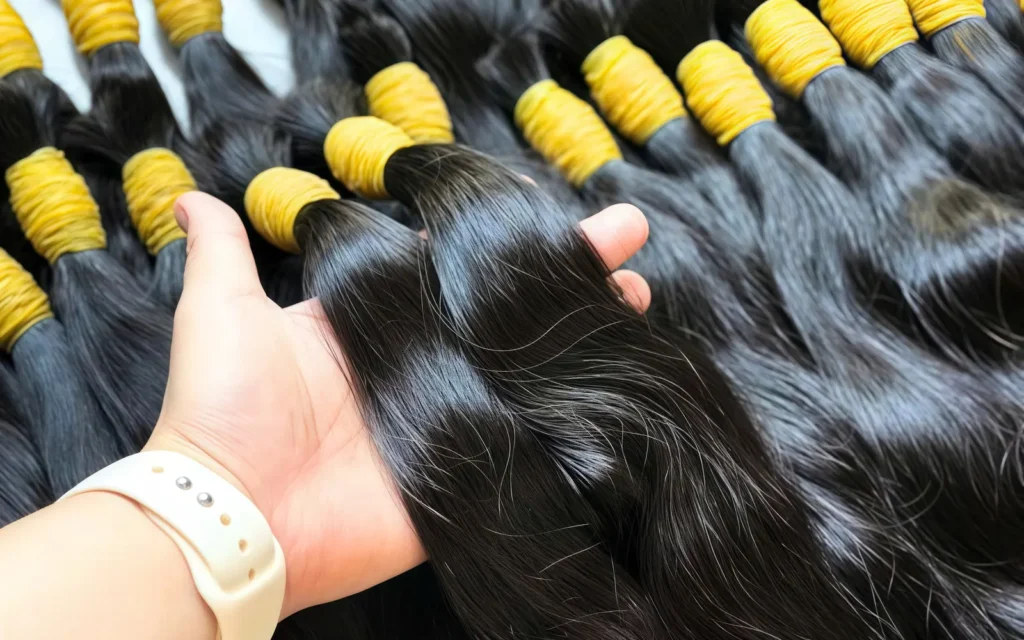
Human hair is a variable natural material. Incoming control determines whether each group suits its intended color, texture, length, and product.
Raw-hair inspection can include:
- General condition, strength, visible damage, contamination, and foreign fibers.
- Root-to-tip direction and cuticle condition where applicable.
- Natural color and suitability for the planned color route.
- Diameter, texture, length distribution, and consistency within the group.
- Identification of the supplier lot and intended production batch.
- Segregation of material that requires review or is unsuitable for the order.
Attachment materials and components also require identification. These may include adhesive tape, polyurethane, keratin material, clips, thread, labels, inserts, boxes, sleeves, and barcodes. The correct approved version must be confirmed before release.
Lot identification also creates the starting point for investigating a later color, shedding, attachment, or consistency issue.
3. Control Hair Preparation, Color, and Texture
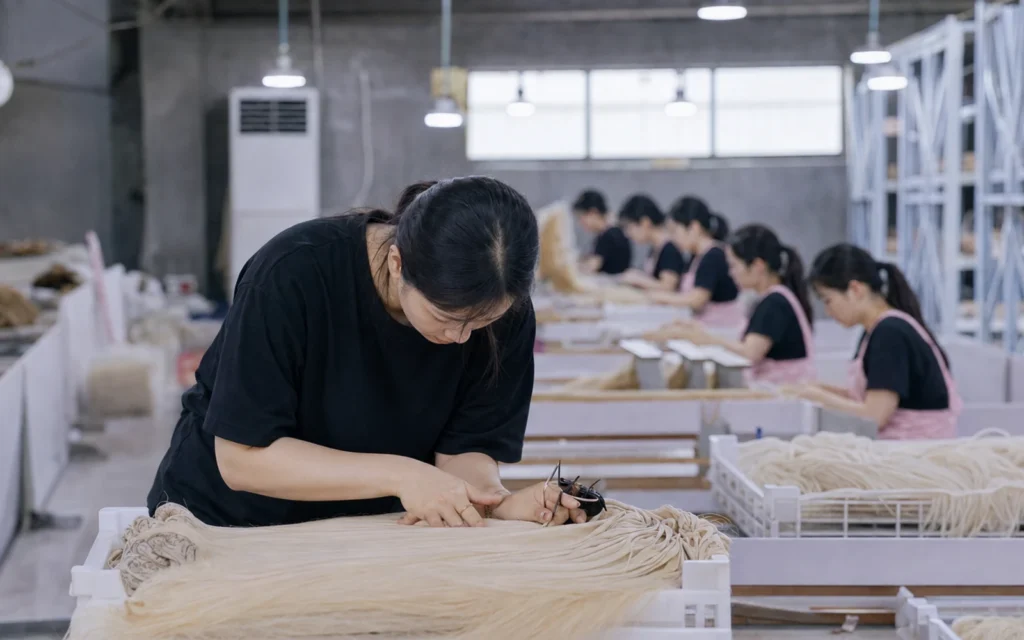
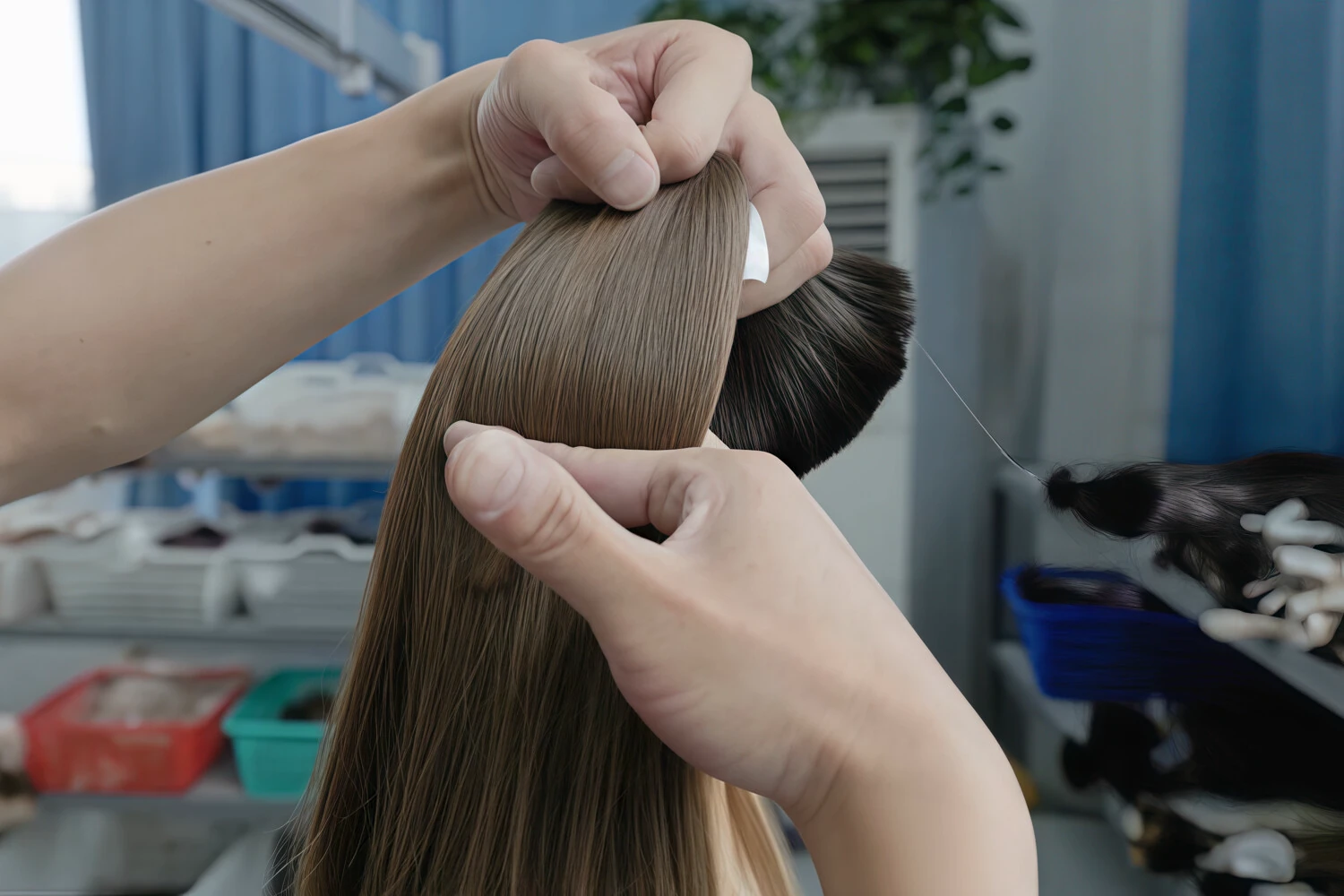
Selected hair may be aligned, graded, hackled, blended, or grouped before color development and construction. Checks should confirm direction, grouping, length profile, and unsuitable-fiber removal.
Color should be controlled against an approved physical standard after the hair is fully dry. Wet hair can appear darker and can conceal differences in tone. The comparison should consider:
- Overall level, tone, and undertone.
- Top, middle, and end consistency.
- Root depth and root length for rooted shades.
- Highlight, lowlight, balayage, or blend proportions.
- Texture pattern and appearance after the agreed evaluation method.
- Condition of the hair after the planned processing route.
- Batch identity and the production reference used for approval.
First-piece or first-batch approval is especially valuable for new shades, changed raw material, new formulas, or dimensional colors. Repeat batches should be evaluated against the retained physical standard and current specification under controlled viewing conditions.
4. Apply Product-Specific Construction Controls
Hair quality alone does not determine extension quality. The attachment structure must be inspected according to how the product is built and used.
| Product system | Typical construction checkpoints |
|---|---|
| Tape-In | Tab dimensions and thickness; even hair distribution; smooth PU or attachment area; adhesive surface and liner; air pockets; clean edges; bonding security; shedding; left/right or paired configuration where specified |
| Weft | Base width and thickness; flexibility; consistency along the usable width; hair distribution; stitching, bonding, or PU formation; return hair where relevant; edge condition; shedding; construction-specific cutting requirements |
| Keratin Tip | Portion weight; bond material, size, shape, color, and flexibility; even hair distribution within the bond; surface cleanliness; cracks or weak points; shedding; compatibility with the specified installation system |
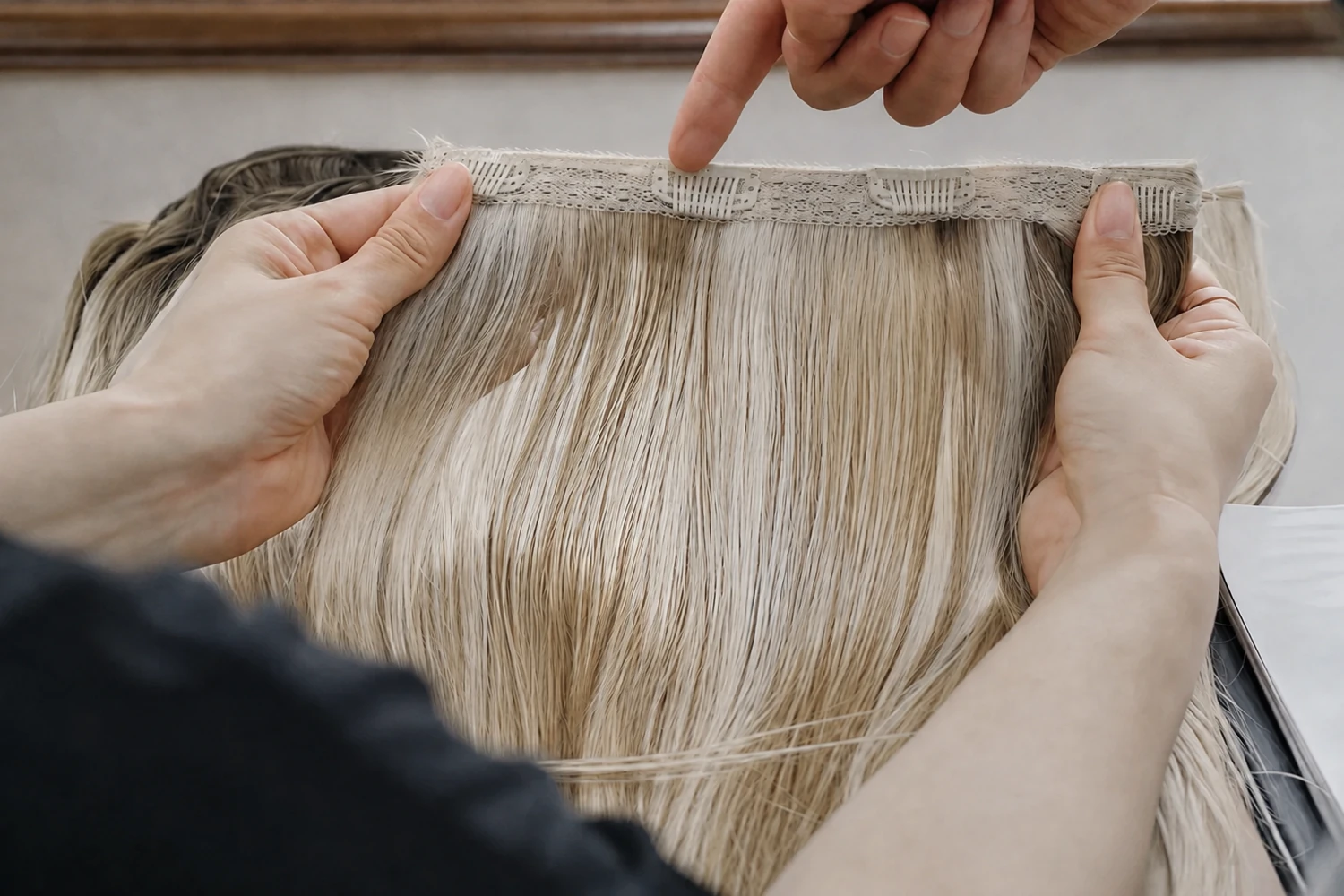
| Clip-In | Correct number and width of pieces; total and per-piece weight distribution; base construction; clip type, count, direction, and spacing; stitching security; edge finishing; set completeness; opening and closing function |
Controls cannot be copied blindly between constructions. Machine, hand-tied, Genius, PU, and other wefts do not necessarily share the same base or cutting instructions. Classic, invisible, seamless, and PU clip-ins also require different base checks.
Inspectors should use the exact approved construction, not a generic family name. Changes to components, tools, processes, or structures should be assessed before full production continues.
5. Use First-Piece and In-Process Inspection
First-piece inspection confirms the intended result before output accumulates. It may check dimensions, weight, color, attachment formation, components, workmanship, and packing setup.
In-process inspection then looks for drift. Examples include:
- Gradual change in tab or bond dimensions.
- Uneven distribution of hair across pieces.
- Increasing air pockets, exposed edges, weak sewing, or incomplete bonding.
- Weight variation between pieces or sets.
- Mixed colors, lengths, components, or work-in-progress labels.
- Different operators interpreting the approved sample differently.
When a check fails, affected material should be held while the team determines when the process last produced an acceptable result. This defines the scope and prevents mixing.
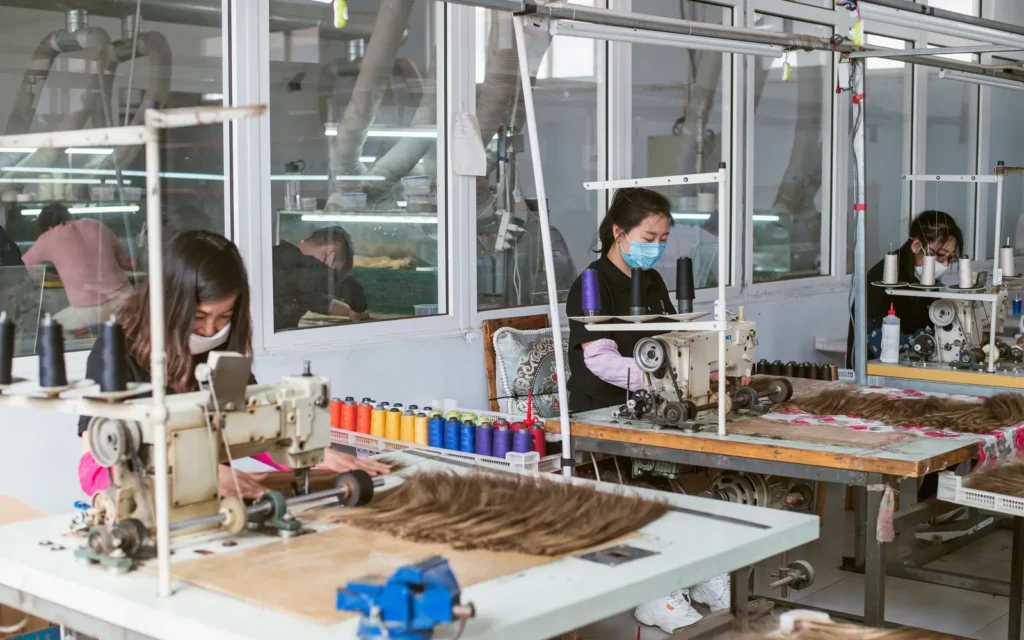
Epoche’s manufacturing process places quality checks across incoming, in-process, and final stages because color, construction, workmanship, and order details cannot be controlled reliably by one last inspection.

6. Complete Final Product Inspection
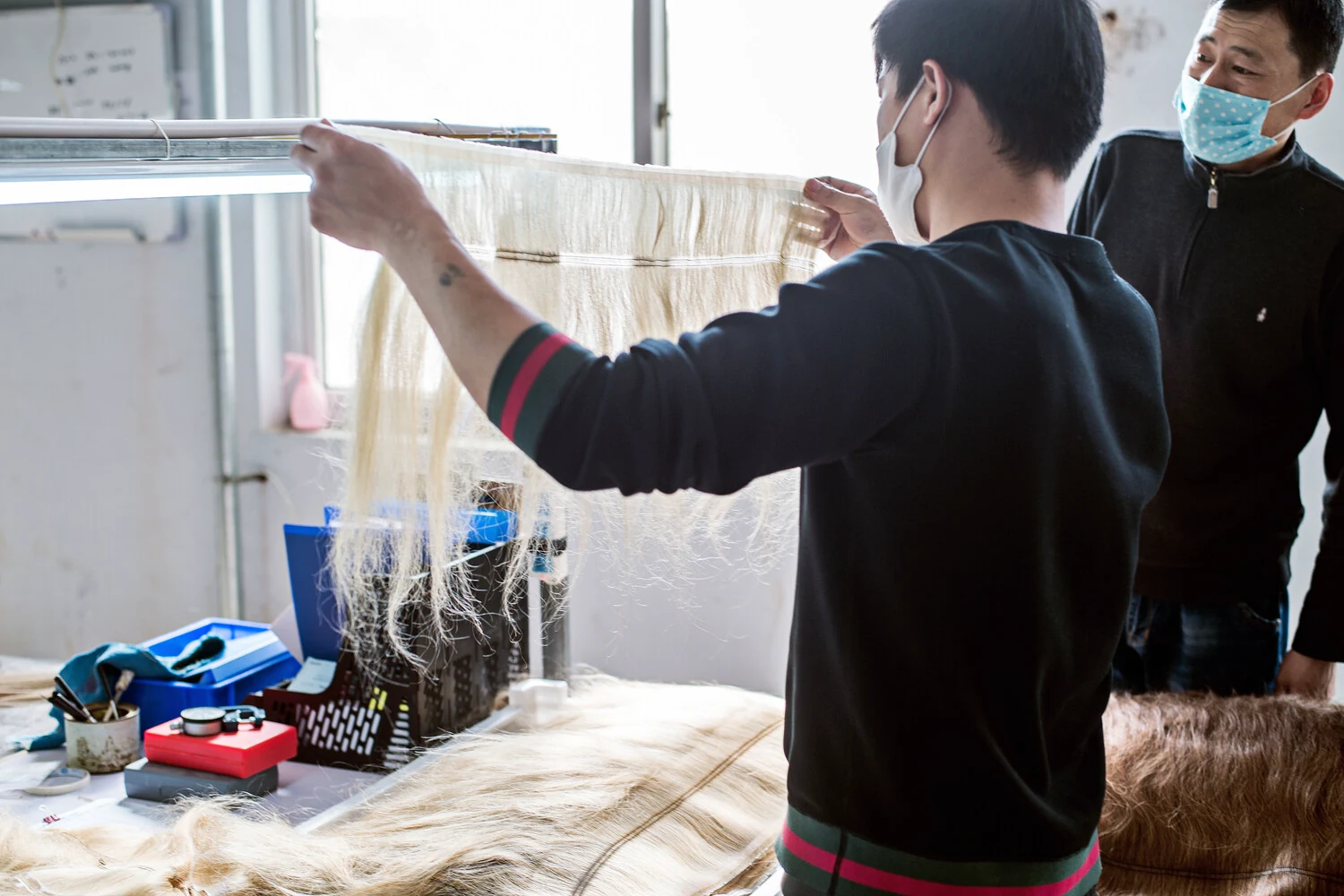
Final inspection verifies conformity before goods are released to packing or shipment. The method and sample plan depend on the product, lot, risk, and buyer agreement.
Hair and Appearance
- Correct shade, tone, blend, root effect, and texture.
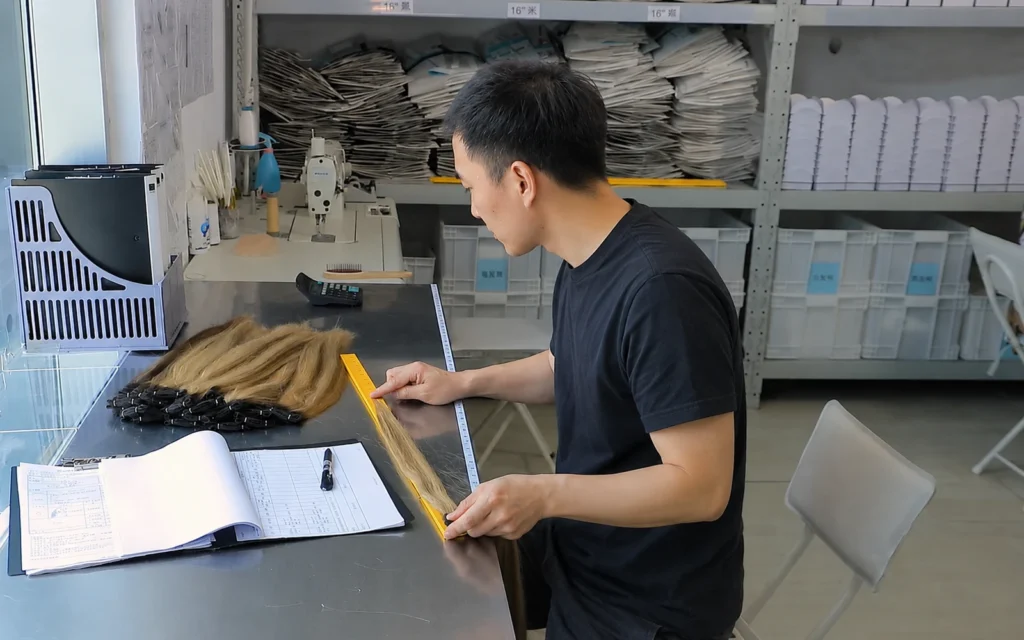
- Correct length, weight, fullness profile, and hair distribution.
- Clean presentation without contamination, avoidable tangling, or processing residue.
- Acceptable workmanship, shedding behavior, and overall condition according to the approved method.
Construction and Function
- Correct attachment type, dimensions, materials, and configuration.
- Secure sewing, bonding, tip formation, clips, or base structure as applicable.
- Clean edges and consistent formation.
- Complete set composition and functional components.
Order Conformity
- Correct SKU, shade, length, weight, quantity, and product version.
- No mixed lots or unapproved substitutions.
- Required inspection record and release status completed.
“QC passed” is only useful when it can be connected to a product, specification version, production lot, inspection result, inspector, date, and release decision.
7. Verify Packaging, Labels, and Shipment Details
Technically acceptable hair can still become commercially unusable under the wrong shade, length, barcode, language, or artwork.
Packaging control should verify:
- Product, SKU, color, length, weight, and quantity on each unit.
- Correct labels, barcodes, inserts, hanging components, and warnings where applicable.
- Approved artwork and dieline version for OEM or private-label packaging.
- Correct piece arrangement and protection of the attachment area.
- Inner-pack and master-carton quantities.
- Shipping marks and carton identification.
- Protection from moisture, contamination, compression, and movement in transit.
When a SKU or artwork version changes, remaining labels, boxes, inserts, and pieces from the previous run should be removed or segregated.
8. Maintain Traceability and Retained References
Traceability must connect the approved standard, raw-hair group, color batch, construction lot, packaging version, and final inspection to the shipment.
Useful identifiers can include:
- Purchase order and customer SKU.
- Specification, sample, and artwork versions.
- Raw-hair and component lots.
- Color or processing batch.
- Production line or work group where relevant.
- Inspection date, inspector, result, and disposition.
- Finished lot, carton, and shipment identification.
- Location of retained color or product samples.
These records show whether a complaint is isolated or may affect a wider quantity.
9. Control Nonconforming Product and Corrective Action
Finding a defect is not the end of quality control. The factory needs a defined response:
- Identify and contain: mark and segregate suspect material or finished goods so they cannot be used or shipped accidentally.
- Define the scope: determine the affected lot, time period, process, component, color batch, or packaging run.
- Evaluate the defect: compare it with the approved specification and classification agreed with the buyer.
- Decide disposition: rework and re-inspect, use under documented concession, return, or reject as appropriate.
- Investigate the cause: examine material, method, equipment, measurement, people, environment, and change history.
- Take corrective action: remove the cause and verify that the action works rather than only sorting the finished goods.
- Communicate changes: obtain approval before changing a material, formula, component, dimension, or construction that affects the agreed product.
Sorting may contain an immediate lot, but repeated sorting without corrective action does not prevent recurrence.
10. Agree on Defect Classes and Acceptance Rules
Defect definitions should be written for the specific product and buyer. A typical framework separates critical, major, and minor defects, but the classification and examples must be agreed rather than assumed.
| Defect class | Practical interpretation | Possible hair-extension examples |
|---|---|---|
| Critical | A condition that creates an unacceptable safety, legal, regulatory, or serious identification risk | Unapproved restricted material; a compliance-critical labeling error; a mixed product that creates a safety or regulatory issue |
| Major | A defect likely to make the product unusable, unsellable, unreliable, or materially different from the approved specification | Shade outside the approved standard; incorrect length or weight beyond the agreed tolerance; serious shedding or tangling; attachment failure; wrong SKU or commercially unusable packaging |
| Minor | A limited departure that does not materially affect intended use or saleability | A small cosmetic packaging mark within an agreed limit; a slight nonfunctional presentation issue |
These are not universal criteria. A packaging mark that is minor for a bulk salon product may be major for premium retail packaging. The approved defect list should reflect the brand, market, use, and risk.
How AQL Sampling Fits Into Hair Extension QC
Acceptance Quality Limit sampling is used to make an accept-or-reject decision about a lot from a defined sample. The current ISO 2859-1:2026 standard describes AQL-indexed sampling procedures for inspection by attributes.
AQL is not a product quality grade, and an accepted lot is not guaranteed to contain zero defects. The buyer and supplier should define the lot, inspection level, defect classes, AQL values, sampling plan, and acceptance/rejection rules with qualified quality personnel.
Sampling does not replace process control. Incoming and in-process checks are still needed to prevent repeated color, construction, or labeling errors.
What ISO 9001 Does—and Does Not—Mean
ISO 9001 provides requirements for a quality management system built around principles such as customer focus, a process approach, and continual improvement. It helps an organization define and control how work is managed.
Certification does not mean every extension is defect-free. Buyers should review the certificate’s validity and scope, then evaluate actual specifications, samples, process controls, records, traceability, and corrective action.
Epoche states that its quality management is supported by ISO 9001:2015 certification, with relevant CE and RoHS documentation maintained according to applicable product and market requirements. Buyers can review current company and compliance information on the About Epoche page and request order-specific documentation where relevant.
B2B Hair Extension QC Checklist
Before approving bulk production or shipment, confirm that:
- □ Specification and approved physical sample are identified.
- □ Color, texture, construction, weight, dimensions, components, and packaging versions are defined.
- □ Raw hair and attachment materials are traceable to the production lot.
- □ New or changed colors and constructions receive first-piece or first-batch approval.
- □ In-process checks match the selected Tape-In, Weft, Keratin Tip, or Clip-In construction.
- □ Inspectors use written methods and agreed tolerances.
- □ Failed material is held, recorded, and re-inspected after rework.
- □ Final inspection covers hair, construction, workmanship, order details, and set completeness.
- □ Labels, barcodes, artwork, quantities, and cartons are verified.
- □ Defect classes and AQL rules are agreed before inspection.
- □ Records identify the lot, standard, result, inspector, date, and disposition.
- □ Change approval and corrective action cover repeat issues.
Warning Signs in a Factory QC Proposal
Be cautious if a supplier:
- Describes quality only as a final visual check or cannot identify the approved sample and specification version.
- Uses the same generic checklist for every extension construction.
- Has no clear response when an in-process result fails.
- Cannot connect a shipment to production records or changes materials without approval.
- Treats ISO certification or an AQL result as proof that every unit is perfect.
- Sorts recurring defects without investigating their cause.
Build Quality Into the Order
Hair extension quality control works when requirements become standards, checkpoints, records, and reactions before bulk production. Incoming control protects material. In-process checks prevent drift. Final and packing inspection verify the order. Traceability and corrective action support repeat production.
The objective is to make quality decisions consistent, visible, and repeatable across people, processes, products, and repeat orders.
To review the controls appropriate for your product, color system, construction, packaging, and market, discuss your QC requirements with Epoche.