Multiple Base Constructions
Lace, monofilament, silk, PU, and hybrid bases can be developed to balance appearance, flexibility, structural stability, attachment, and intended use.
Epoche Hair · Since 2004
Human Hair Toppers add coverage and volume while blending with natural hair. Customize the base, density, parting, attachment, color and length for your collection.
Factory Direct · OEM / ODM · Private Label · Global Supply
Product Advantages
Product Construction Detail 06
Lace, monofilament, silk, PU, and hybrid bases can be developed to balance appearance, flexibility, structural stability, attachment, and intended use.
Base size, shape, front contour, coverage area, hair density, and hair distribution can be tailored to the approved product specification.
Coordinate the parting position and hair direction with the intended hairstyle. A defined or flexible parting area helps the topper blend with surrounding hair and supports the planned styling options.
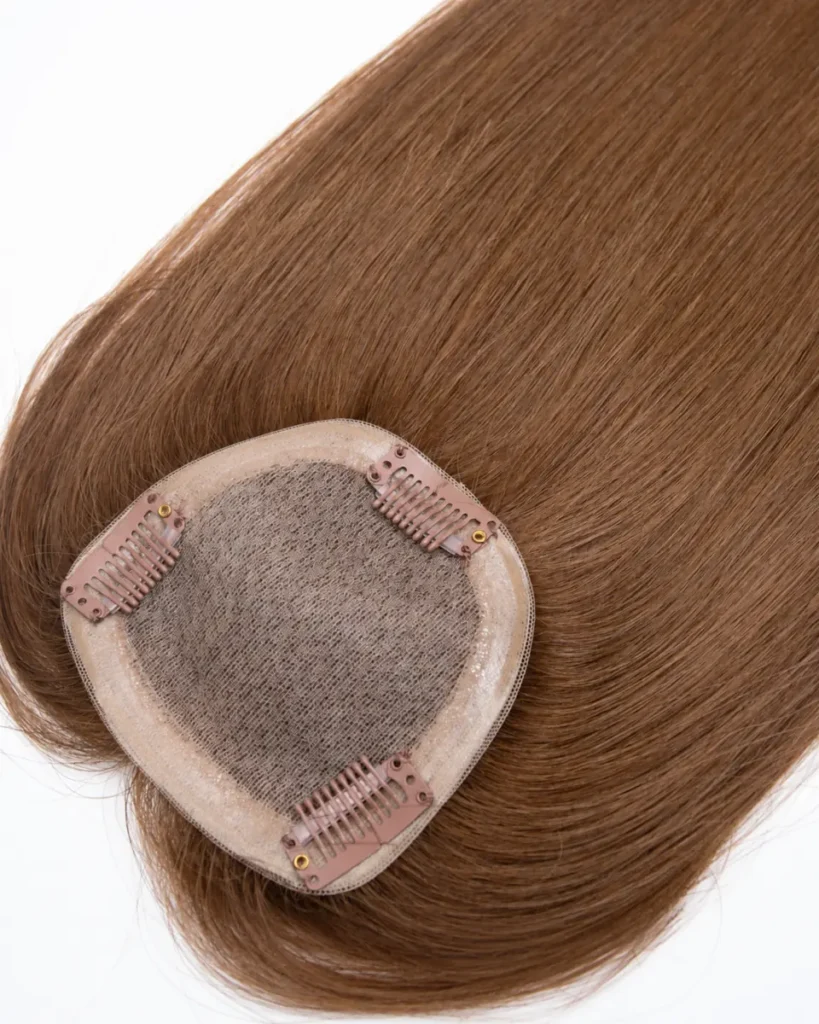
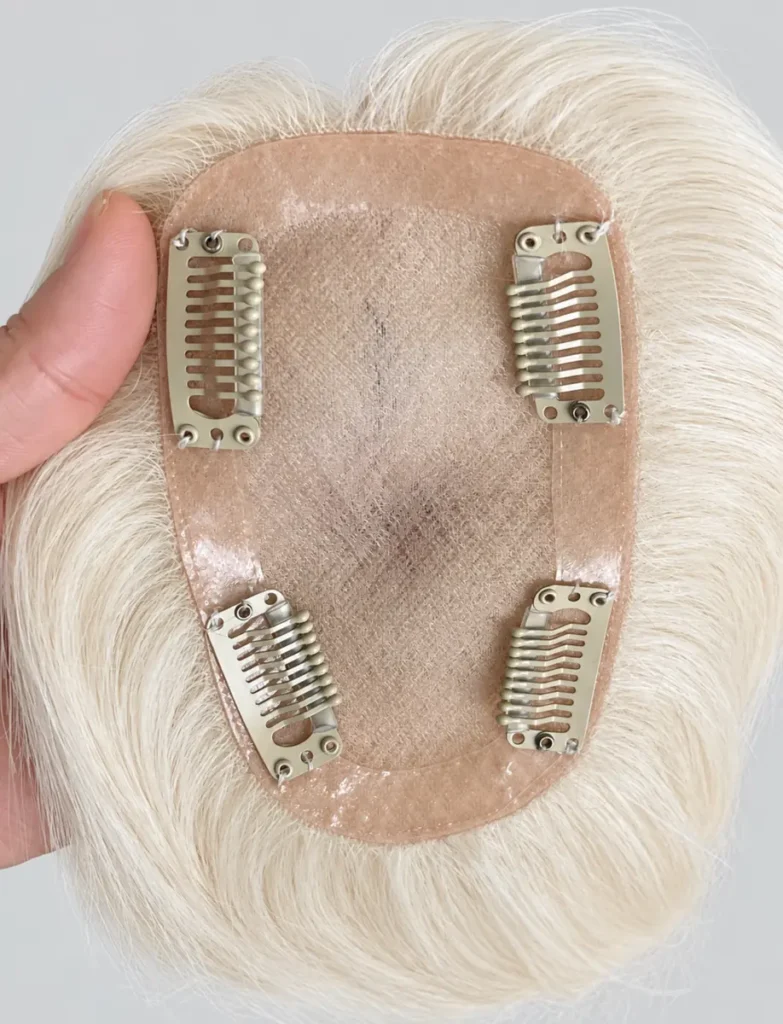
Sewn-on clips and tape-compatible PU areas can be positioned according to the selected base construction, coverage area, and intended wearing method.
Base dimensions, ventilation or injection workmanship, density distribution, edge finishing, clip placement, and shedding resistance are controlled for stable sample-to-bulk consistency.
Hair quality, length, texture, color, base construction, density, attachment details, labels, and packaging can be developed for private-label collections.
Product Specifications
Available in 2-inch increments. Final length options depend on hair quality, texture, color, base construction, and the approved sample specification.
Weight is customized according to base dimensions, hair length, density, hair distribution, and the required finished fullness.
See Color Development & Matching below for the representative palette and custom matching options.
Density is customized according to base size, coverage area, hair length, parting design, hair distribution, and the approved sample specification.
Single-drawn and double-drawn configurations are available. Final long-hair ratio depends on hair length, hair quality, color, density, base size, hair distribution, and confirmed sample specifications.
For clip-in designs, align the topper and close the clips onto suitable natural hair. Open all clips before removal. A professional should fit tape-compatible versions and follow the selected tape system's instructions.
Color Options
Representative color options include #4, #60, #613, #P18-60, and #P2-6. Solid, piano, highlighted, rooted, ombré, balayage, and custom-matched colors are available. Final colors are confirmed through sample approval. See the Epoche Hair Extension Color Ring for additional representative color options.
Product Overview
Custom Human Hair Toppers add coverage and volume to selected areas of the top or crown while blending with existing hair. Base size, parting, density, and attachment work together to shape the finished result. Brands and salons can develop each piece around the intended coverage, hairstyle, and wearing method.
Start with the area that needs coverage and the position of the natural parting. Then define the base width, depth, and shape. The base should cover the intended area while allowing suitable placement for clips or other attachments.
The photographed toppers show different base layouts with sewn-on clips. Some have a mesh section with perimeter edging, while another uses sewn weft rows within a larger base. Clip quantity and placement therefore vary with the construction.
Available base options include lace, monofilament, silk top, PU, and hybrid designs. For example, a hybrid base can combine a parting section with a different perimeter material. Choose the materials together with the hair direction, edge finish, and intended attachment.
Parting position and hair direction influence how the topper blends into the surrounding hair. A defined part follows a planned position, while a flexible parting design needs a suitable area for styling. Confirm this usable area on the sample before choosing the finished hairstyle.
Density can vary across the front, parting, center, and perimeter. For a softer transition, the front and edges may need a different distribution from the center. Also compare the topper’s fullness with the natural hair beneath and around it.
Hair length and long-hair ratio affect the finish through the lengths and ends. However, these measurements describe different aspects from density across the base. Review them together so the finished piece provides the intended coverage without an abrupt change in volume.
Finally, check the sample from above, the front, and both sides. This shows how the parting, base edge, and surrounding hair work together. A fitting assessment also helps confirm the front contour and attachment positions.
Clip-in Human Hair Toppers support removable self-application. First, open all clips and position the topper over the intended area. Align the parting, then close the clips onto suitable natural hair without pulling the base tight.
The attachment needs enough surrounding hair to hold the clips comfortably. Therefore, review the base size and clip layout together during fitting. A professional fitter can help assess the placement and blend the topper into the wearer’s hairstyle.
Tape-compatible versions use attachment areas suitable for the selected double-sided tape system. Some custom designs combine clips with these areas. Confirm the tape and attachment surface together during sample development.
For tape fitting, a trained professional should confirm the tape, attachment area, maintenance routine, and removal method. Follow the selected system’s instructions for wear and cleaning. During removal, allow the compatible remover to release the tape before lifting the base.
Remove clip-in toppers before sleeping, showering, swimming, or exercise. Open every clip first, then lift the piece away gently. Tape-attached versions follow their own fitting and maintenance instructions.
For brushing, support the base and detangle gently from the ends upward. Wash only when needed with lukewarm water and a gentle shampoo suitable for human hairpieces. Also avoid rubbing, twisting, or stretching the base during washing.
Apply conditioner mainly through the mid-lengths and ends, keeping heavy products away from the attachment areas. After rinsing, allow the hair and base to dry completely before storage. Use heat protection on the lengths and keep hot tools away from the base, clips, and tape areas.
The American Academy of Dermatology offers additional guidance on caring for natural hair while wearing extensions.
Choose Virgin Hair or Remy Hair according to the required shade, texture, and product brief. Hair lengths are customizable in two-inch increments. Final combinations depend on the hair quality, base construction, density, and selected finish.
Texture options include Straight, Body Wave, Natural Wave, and Water Wave. In addition, single-drawn and double-drawn specifications support different requirements for fullness through the ends. Product weight follows the base dimensions, hair length, density, and hair distribution.
Color development covers solid shades, highlights, piano mixes, rooted colors, ombre, balayage, and custom matches. Start with the Hair Extension Color Ring, then review the selected color on a finished sample. Also check root depth and shade transitions where the topper meets the natural hair.
OEM and ODM options cover base materials, dimensions, shape, parting, hair direction, and density distribution. Buyers can also specify clip details, tape-compatible areas, perimeter finishing, and hair attachment methods. Private label options include labels, care cards, bags, and boxes.
Before bulk production, compare the sample with the agreed measurements, density layout, parting, and attachment specification. In addition, review edge finishing, clip operation, hair retention, and color consistency. Confirm the approved sample and packaging as references for production and repeat orders.
To develop Human Hair Toppers for your collection, request a sample and quotation. Include the intended coverage, base dimensions, attachment preference, hair length, texture, color, and density. This gives the sampling team a clear starting point for your design.
OEM & Customization
Epoche supports OEM, ODM, and private-label development for Custom Human Hair Toppers.
Customization options include:
Final specifications are confirmed through sample evaluation before bulk production.
Care & Longevity
Practical maintenance guidance helps preserve hair quality, protect the attachment area, maintain appearance and support longer service life.
Manufacturing Control
Each sample is developed around defined construction, hair, color and finishing requirements so approved specifications can be carried consistently into bulk production.
Frequently Asked Questions
Custom Human Hair Toppers are partial-coverage human hairpieces designed to add coverage and volume to selected areas of the top or crown while blending with the wearer’s natural hair. Base construction, size, shape, density, parting, hair direction, attachment method, length, color, and finished appearance can be developed to an approved specification.
Base options include lace, monofilament, silk top, PU, and hybrid constructions. A design can combine different materials for the parting area, body, and perimeter. Choose the construction according to the required coverage, styling flexibility, and attachment method.
Yes. Clip-in toppers use sewn-on clips for removable self-application. Tape-compatible designs incorporate suitable PU or attachment areas for the selected double-sided tape system. The final configuration should be confirmed according to the base construction, fitting method, and approved sample.
Measure the area that needs coverage and assess where the attachments can sit securely. For a clip-in design, the clips need suitable natural hair around that area. Confirm the base width, depth, shape, and clip positions together during a fitting assessment.
Custom Human Hair Toppers are available in Virgin Hair and Remy Hair. The suitable option is selected according to the required color processing, length, texture, base construction, performance expectations, target market, and product positioning.
Yes. The sample can be used to confirm hair quality, color, length, texture, base material, base dimensions, density, parting, hair direction, attachment configuration, weight, and packaging. Bulk production proceeds after the sample and final specifications are approved.
Start Your Project