
Hand-Knotted Fine-Thread Construction
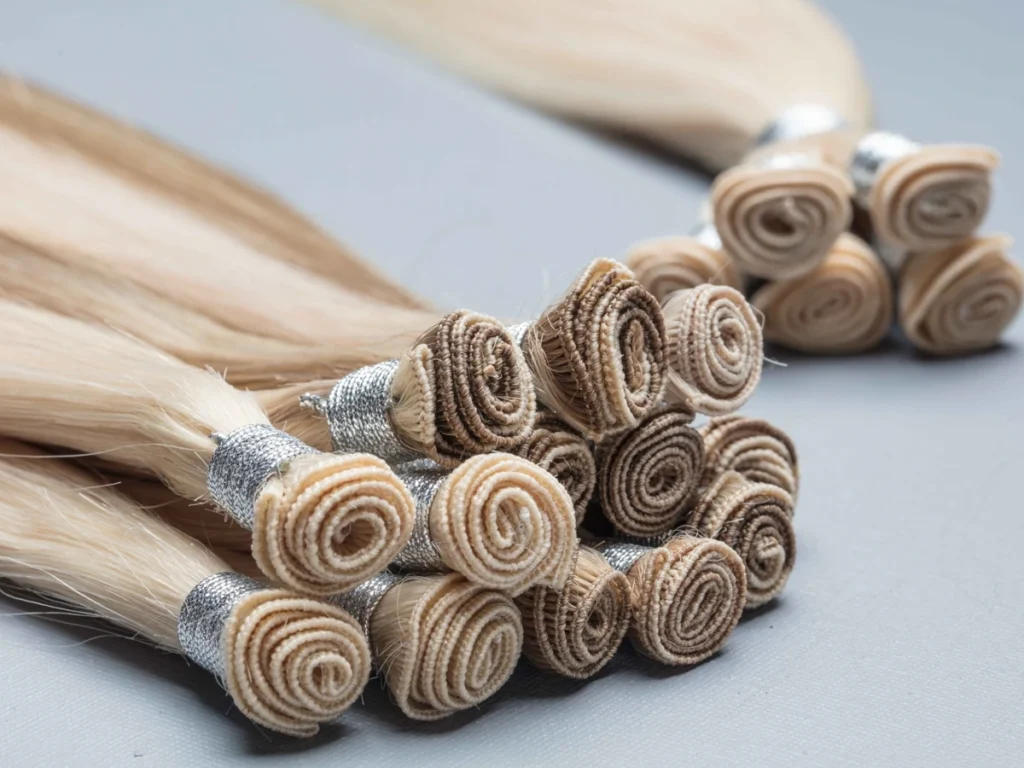
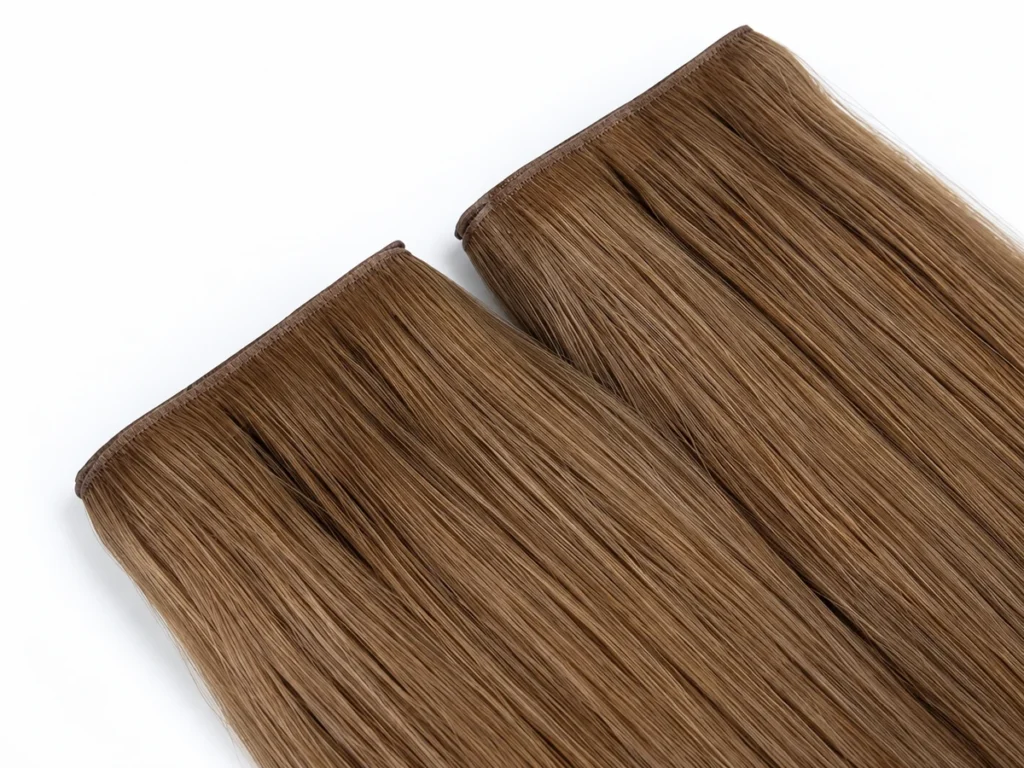
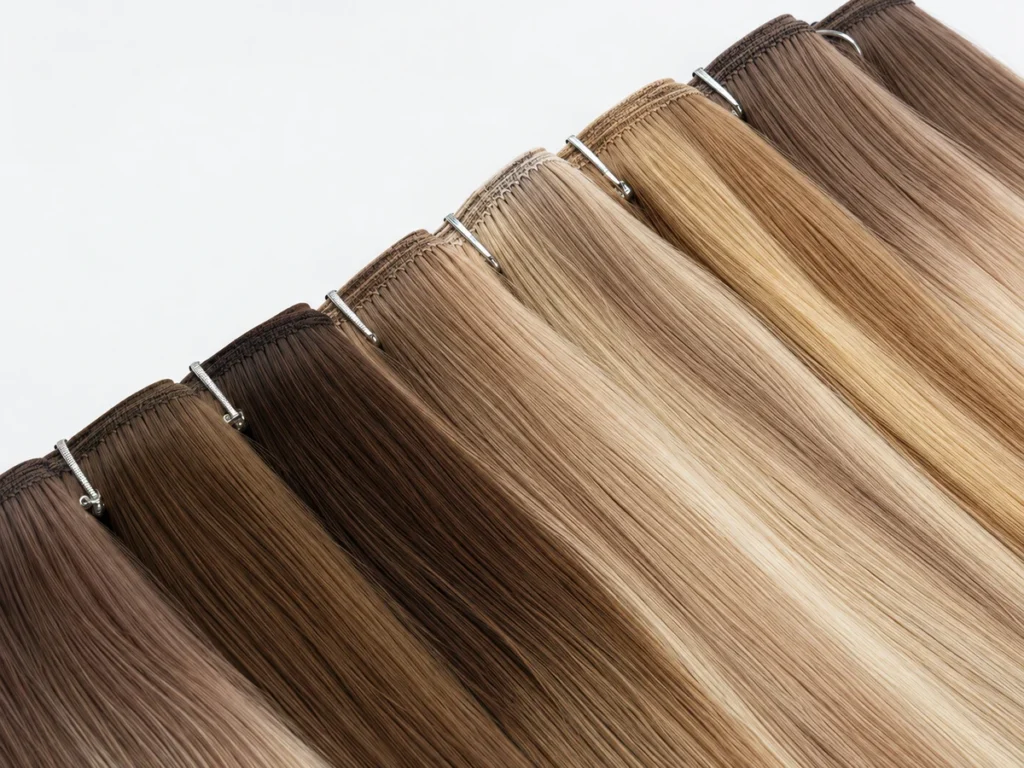
Aligned human hair strands are tied by hand onto a fine thread foundation, creating the narrow weft seam associated with traditional Hand-Tied Weft Hair Extensions.
Epoche Hair · Since 2004
Hand-Tied Weft Hair Extensions use a fine, hand-knotted seam for a thin, flexible profile. Supplied as pre-sized pieces that should not be cut through the seam, they support professional sew-in or beaded-row installation with customizable widths, weights, colors, and packaging.
Factory Direct · OEM / ODM · Private Label · Global Supply
Product Advantages
Product Construction Detail 01
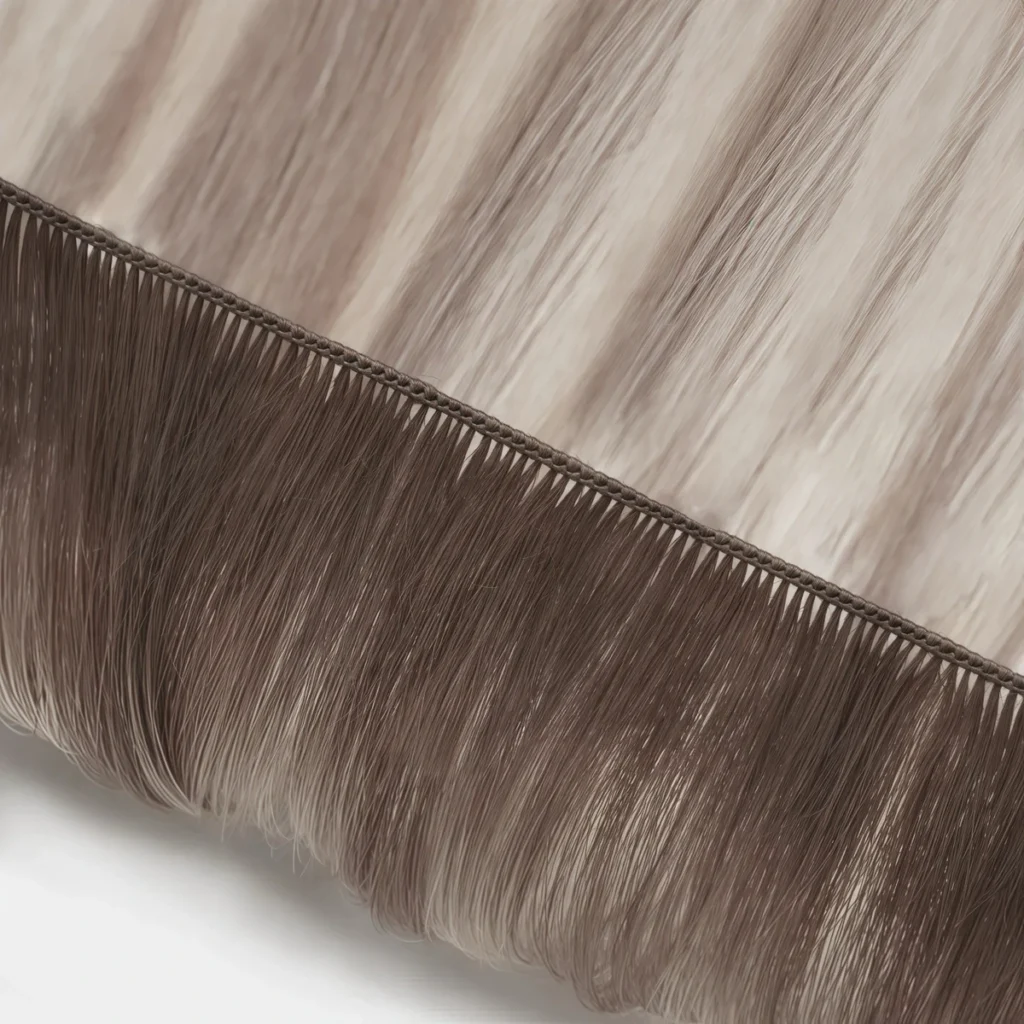
Aligned human hair strands are tied by hand onto a fine thread foundation, creating the narrow weft seam associated with traditional Hand-Tied Weft Hair Extensions.
Seam width, seam thickness, thread tension, knot spacing, and hair distribution are controlled to produce a lighter and more flexible profile than a conventional Machine Weft.
Each piece is manufactured to an approved width because the hand-tied seam must remain intact. Required piece widths, piece counts, and pack combinations are confirmed before production.
Return-hair length, amount, direction, top-edge alignment, knot finishing, and piece-end reinforcement are controlled according to the approved product specification.
Piece weight, strand alignment, hair distribution, long-hair ratio, and seam construction are coordinated to support repeatable pack specifications and sample-to-bulk consistency.
Hair quality, lengths, textures, colors, long-hair ratios, piece widths, piece weights, seam specifications, return hair, labels, and packaging can be developed through sample confirmation.
Product Specifications
Available in 2-inch increments. Final availability depends on hair quality, color, texture, piece width, piece weight, and confirmed sample specifications.
Individual piece weight and total pack weight can be customized according to hair length, piece width, number of pieces per pack, hair distribution, long-hair ratio, and packaging requirements.
See Color Development & Matching below for the representative palette and custom matching options.
Single-drawn and double-drawn configurations are available. Final long-hair ratio depends on hair length, hair quality, color, piece weight, hair distribution, and confirmed sample specifications.
Installed professionally by sewing pre-sized Hand-Tied Weft pieces onto a beaded row or braided foundation with extension needle and thread. The tied seam must remain intact and should not be cut width-wise. One or more pieces may be layered according to the approved placement plan. Row count, piece width, layering, stitching pattern, weight distribution, placement, and tension depend on the selected installation system. No adhesive or heat is required for these methods.
Color Options
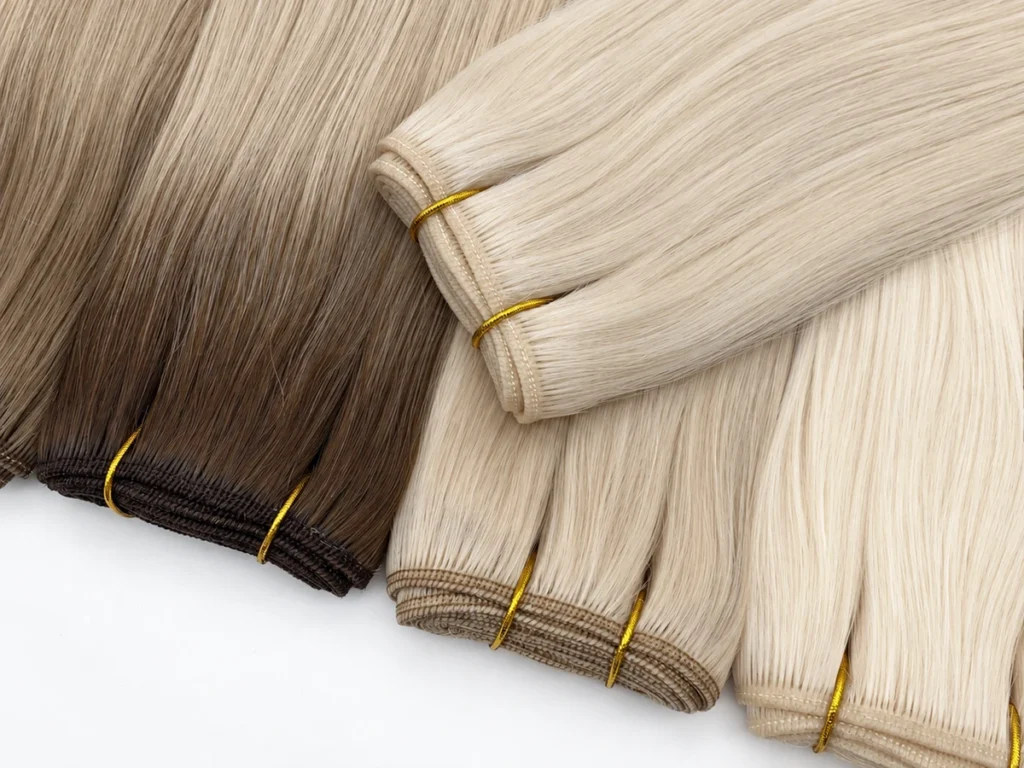
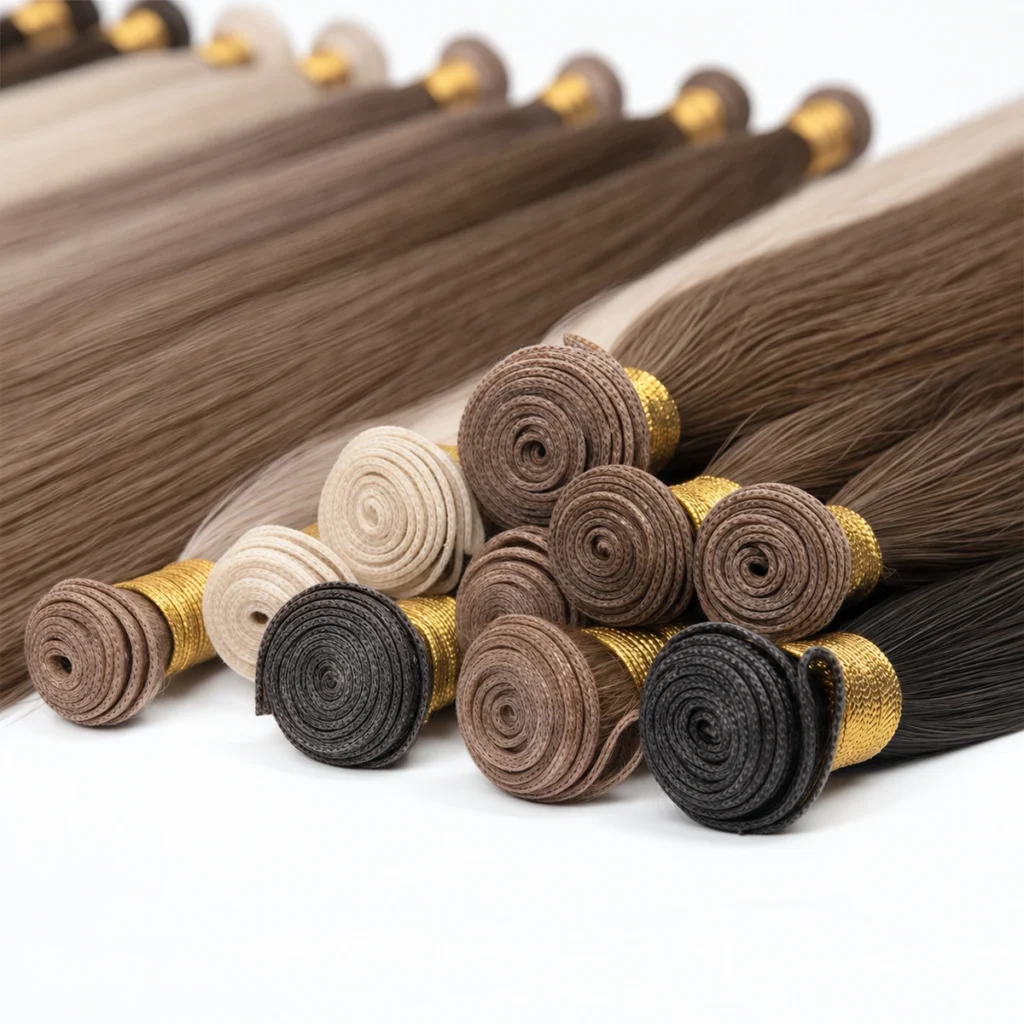
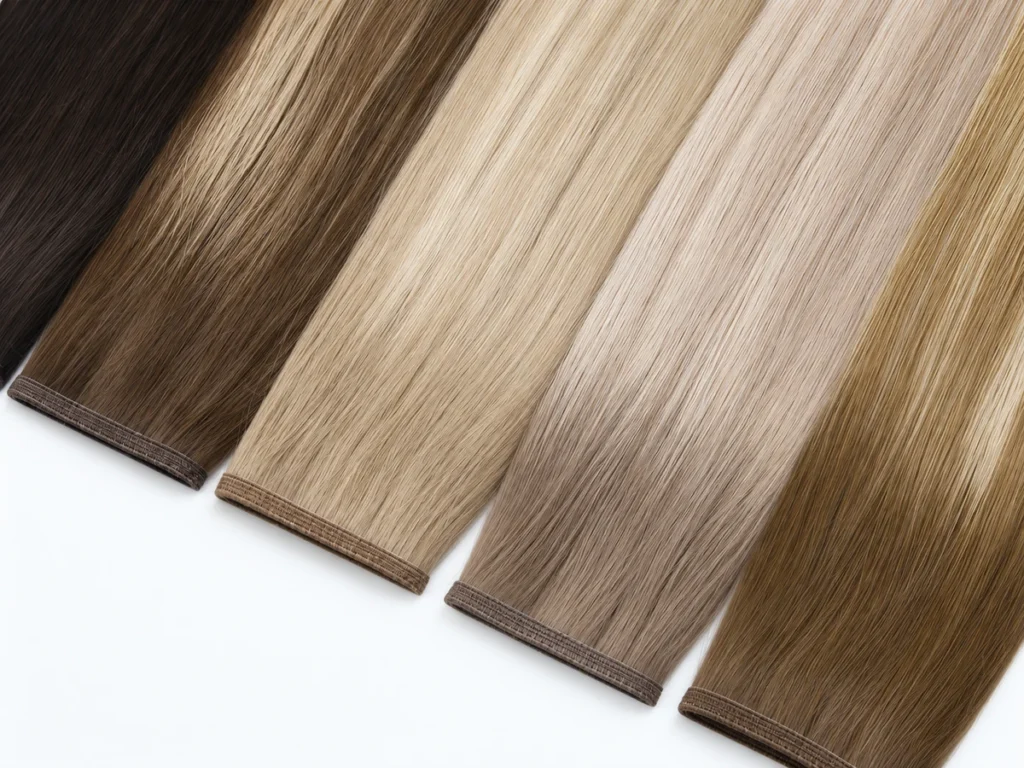
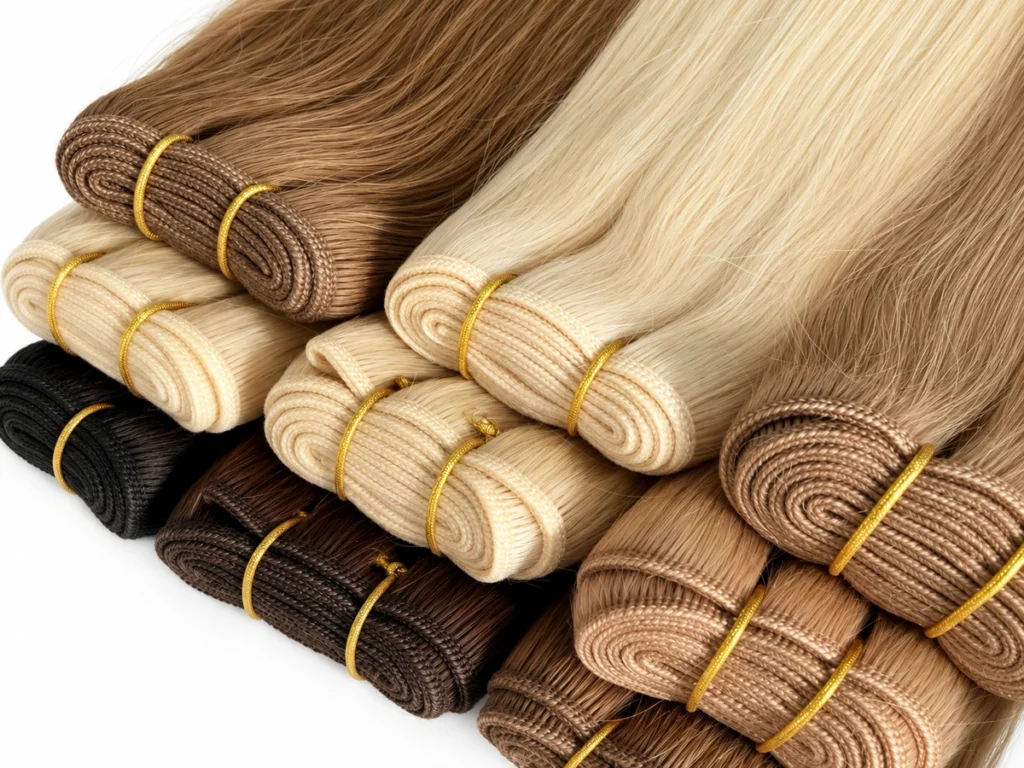
Representative color options include #4, #60, #613, #P18-60, and #P2-6. Solid, piano, highlighted, rooted, ombré, balayage, and custom-matched colors are available. Final colors are confirmed through sample approval. See the Epoche Hair Extension Color Ring for additional representative color options.
Product Overview
Hand-Tied Weft Hair Extensions use a traditional hand-tied construction to secure aligned human hair onto a fine thread foundation. This method creates a narrow, flexible seam and a refined weft profile. The market may also describe this construction as a hand-tied hair weft or hand-knotted weft.
Unlike a continuous machine-sewn weft, traditional Hand-Tied Wefts are supplied in planned sections or pre-sized widths. The tied seam also includes return hair. Buyers should evaluate the seam, return-hair finish, hair distribution, and section dimensions together when approving a sample.
Skilled production workers tie aligned hair onto the thread foundation to form the Hand-Tied Weft seam. Epoche controls knot spacing, thread tension, seam width, seam thickness, hair alignment, and edge finishing against the approved specification.
A fine seam helps create the lightweight and flexible profile associated with traditional Hand-Tied Weft Hair Extensions. However, seam appearance alone does not determine product quality. Hair quality, color, weight, long-hair ratio, and workmanship still require their own production standards.
Traditional Hand-Tied Weft pieces should remain within their approved tied sections. Cutting directly through the tied seam can loosen the construction and may cause the weft to unravel. For this reason, buyers should define the required section widths during product development.
Epoche can develop section dimensions around the intended product specification. Buyers should confirm piece width, pack composition, finished weight, and installation requirements before bulk production. This approach avoids treating Hand-Tied Weft like a freely cuttable Genius Weft.
Traditional Hand-Tied Weft includes short return hair near the seam. Buyers can review its length, amount, direction, feel, and finished appearance during sample approval. Epoche controls these details together with knot security and hair distribution.
The goal is a consistent finished seam rather than an undefined claim such as “the shortest possible return hair.” The approved sample provides a clearer reference for production and future reorders.
Professionals commonly install Hand-Tied Weft Hair Extensions by sewing the pre-sized sections onto a prepared braided foundation or beaded row. The installer determines row count, section placement, layering, stitch pattern, and tension for the intended application.
Because the tied seam should not be cut casually, section planning forms an important part of professional installation. Maintenance and removal should also protect the seam and natural hair from unnecessary pulling or tension.
Hand-Tied and Machine Wefts both use traditional seam constructions and can include return hair. Machine Weft uses machine stitching and generally creates a more substantial seam. Hand-Tied Weft uses a fine tied foundation and planned section widths.
Genius Weft follows a different construction. Professionals can cut Genius Weft to the required width without adhesive edge sealing, while traditional Hand-Tied Weft should stay within its tied sections. Buyers can compare these options in the Weft Hair Extensions collection.
Epoche manufactures Hand-Tied Weft Hair Extensions for wholesale hair brands, distributors, salons, and professional extension businesses. We offer Virgin Hair and Remy Hair options and develop each product around an approved specification.
Buyers can customize hair length, texture, color, long-hair ratio, finished weight, section width, seam specifications, thread color, return-hair requirements, and pack composition. Epoche also supports OEM, ODM, and private label Hand-Tied Weft programs with customized labels and packaging.
Color development can include solid, piano, highlighted, rooted, ombré, balayage, and custom-matched shades. Review representative options in the Hair Extension Color Ring.
As a professional Hand-Tied Weft Hair Extensions manufacturer, Epoche controls the hair, tied seam, section dimensions, weight, color, and finished workmanship against the approved sample. Request Hand-Tied Weft samples before confirming bulk production.
OEM & Customization
Epoche supports OEM, ODM, and private-label development for Hand-Tied Weft Hair Extensions, also known as Hand-Tied Hair Wefts.
Customization options include:
Hair specifications, hand-tied construction, seam dimensions, return-hair finishing, piece widths, piece weights, pack combinations, and completed workmanship are confirmed through sample evaluation before bulk production.
Care & Longevity
Practical maintenance guidance helps preserve hair quality, protect the attachment area, maintain appearance and support longer service life.
Manufacturing Control
Each sample is developed around defined construction, hair, color and finishing requirements so approved specifications can be carried consistently into bulk production.
Frequently Asked Questions
Hand-Tied Weft Hair Extensions are pre-sized human hair weft pieces made by tying aligned strands by hand onto a fine thread foundation. This construction creates a narrow, lightweight, and flexible seam for professional sew-in or beaded-row installation.
Traditional Hand-Tied Weft pieces should not be cut through the tied seam because cutting may loosen the knots and cause the weft to unravel. Required piece widths should be selected or custom-manufactured before installation. The free hair lengths below the seam may still be professionally trimmed and blended.
Hand-Tied Wefts use hair strands tied by hand onto a fine thread foundation, creating a narrower and more flexible seam. Machine Wefts use reinforced machine stitching and generally have a wider, more substantial seam. Machine Wefts may be cut when the ends are properly sealed, while Hand-Tied Weft seams should remain intact.
Traditional Hand-Tied Wefts use a hand-knotted fine-thread seam, include return hair, and are supplied in pre-sized pieces that should not be cut through the seam. Genius Wefts use an ultra-thin, cuttable construction without conventional return hair and do not require adhesive edge sealing after cutting. Flat Wefts also use a low-profile construction without conventional return hair, but freshly cut Flat Weft ends require appropriate edge sealing.
Pre-sized Hand-Tied Weft pieces are commonly sewn onto a professionally constructed beaded row or braided foundation with extension needle and thread. One or more pieces may be layered according to the placement plan. Row count, piece width, weight distribution, stitching pattern, placement, tension, maintenance, and removal should be determined by a trained professional.
Yes. Virgin Hair or Remy Hair, length, texture, color, long-hair ratio, piece width, piece weight, number of pieces per pack, thread specifications, knot spacing, seam dimensions, return hair, end reinforcement, labels, and packaging can be customized. Samples can be evaluated before bulk production for construction, flexibility, consistency, color, and finished workmanship.
Related Products
Start Your Project